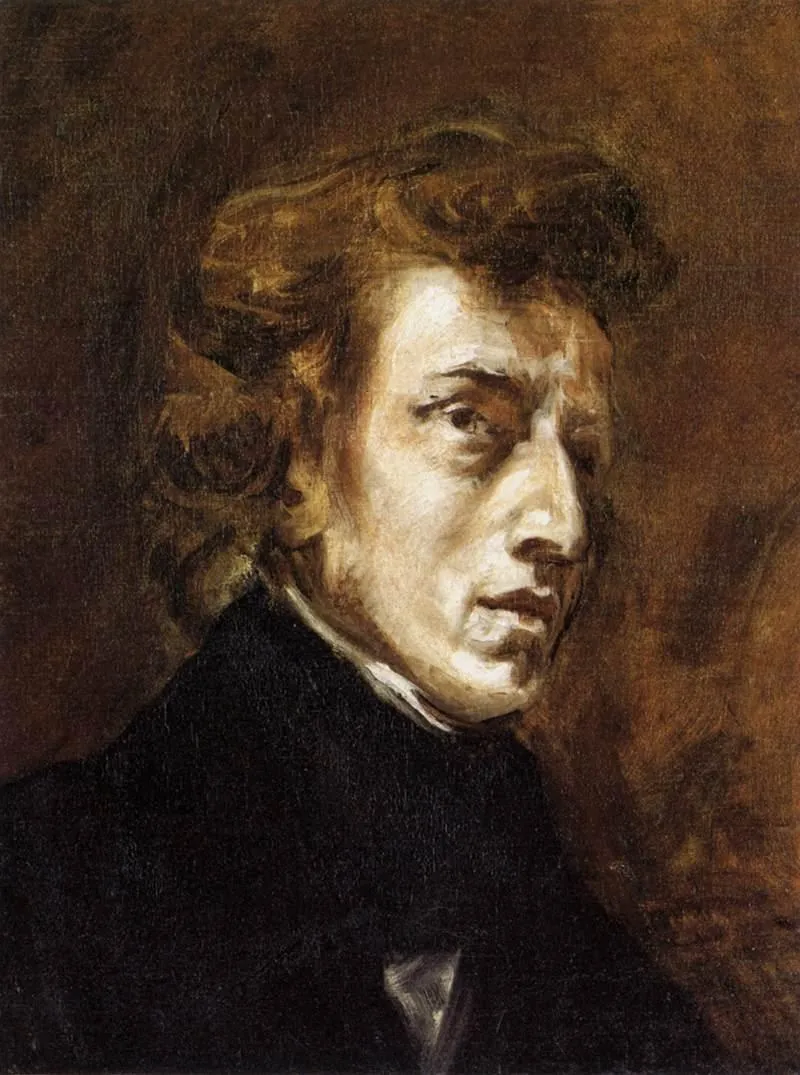
Mozart’s footprints
Wolfgang Amadeus MozartJoannes Chrysostomus Wolfgangus Theophilus Mozart
1756–1791
From the house in Salzburg where he was born, across Europe, to his last year in Vienna: the 31 places Mozart lived in and traveled to, and the pieces he wrote there.
Scroll to travel. The map moves to each place as you read.
- Where he lived or stayed
- A short visit
- The journey so far
- The road ahead
1756
Salzburg: the house on GetreidegasseAustria
Wolfgang was born on January 27, 1756, at Getreidegasse 9, the youngest of the seven children of the court violinist Leopold Mozart and his wife Anna Maria; only he and his sister Maria Anna, known as Nannerl, lived past infancy. He was baptized the next day in the cathedral as Joannes Chrysostomus Wolfgangus Theophilus. His father taught both children, and when the boy was five he wrote Wolfgang’s first little pieces down in Nannerl’s music book.
Practicing one of these? Track it in Piano StreakPieces from this place
Listen on Apple Music
1762
MunichGermany
In 1762 Leopold took the two children on their first journey, to Munich, where they played at the court of Elector Maximilian III Joseph. It was Wolfgang’s first appearance outside Salzburg.
1762
Vienna: Schönbrunn PalaceAustria
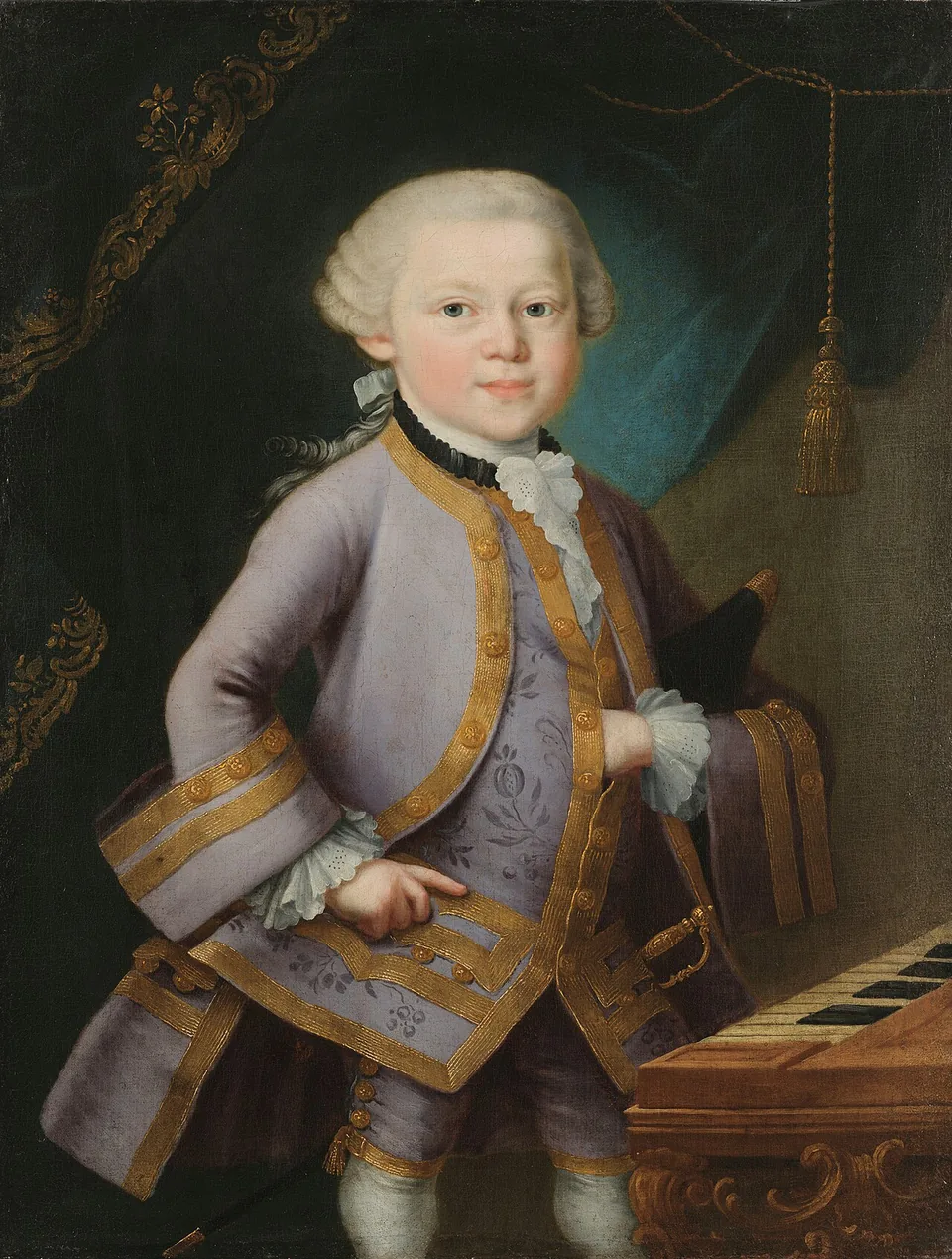
Mozart as a boy, in the court dress given to him in ViennaPainting attributed to Pietro Antonio Lorenzoni, 1763 That autumn the family traveled to Vienna, and on October 13 the children played before Empress Maria Theresa and her family at Schönbrunn. The empress sent them court clothes afterward, and Wolfgang was painted in his the following year.
1763
FrankfurtGermany
The family’s grand tour began on July 9, 1763, and lasted almost three and a half years. In Frankfurt the children gave several public concerts. The fourteen-year-old Goethe was in the audience, and decades later he still remembered “the little fellow with his wig and his sword.”
1763–64 · 1766
Paris and VersaillesFrance
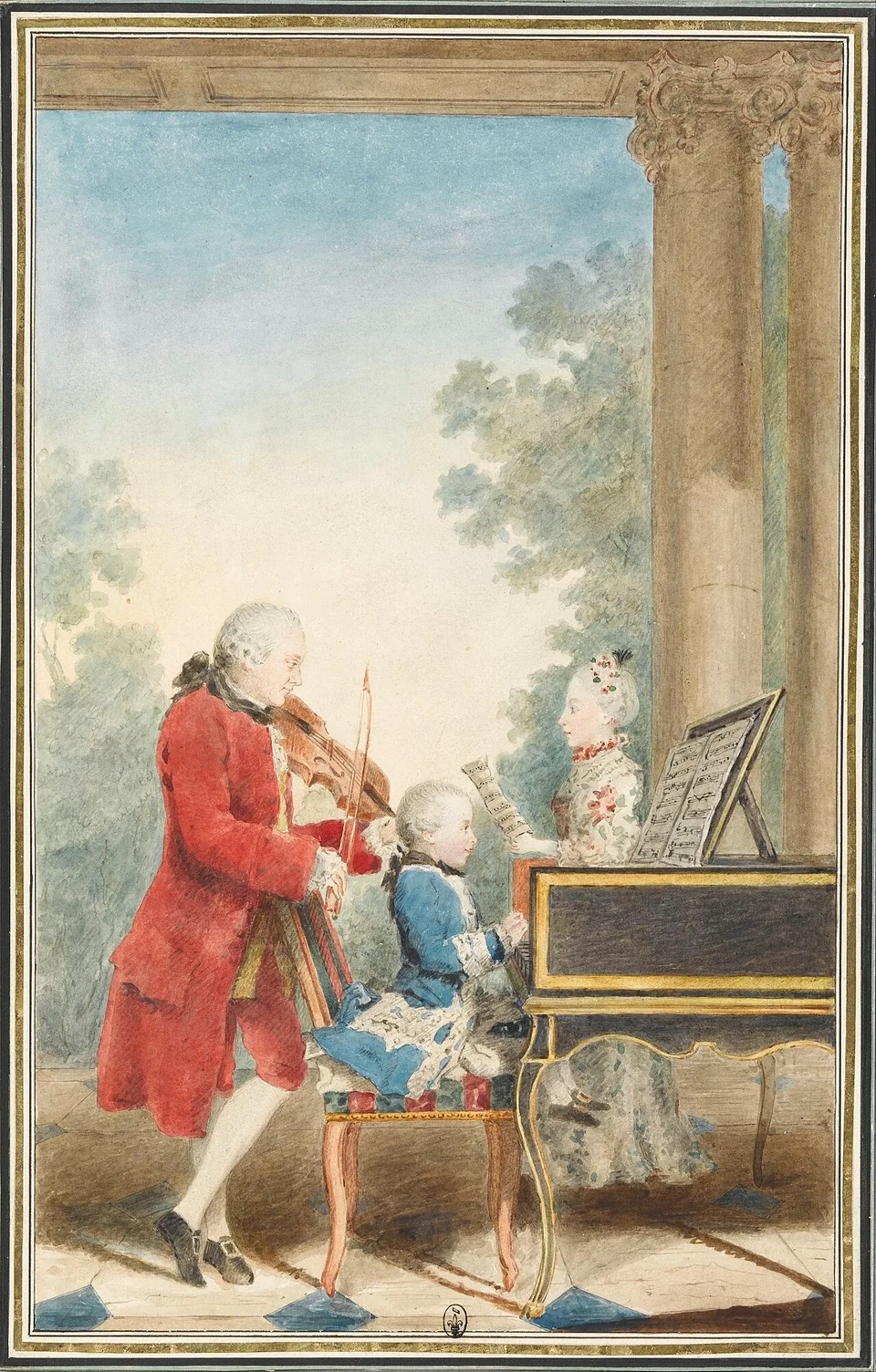
Leopold, Wolfgang and Nannerl Mozart in ParisWatercolor by Louis Carrogis Carmontelle, 1763 The family reached Paris on November 18, 1763, and from Christmas Eve spent two weeks at Versailles, where the children were received by the royal family. In the spring of 1764 Wolfgang’s first printed works appeared: two pairs of sonatas for keyboard with violin. He was eight. They stopped in Paris again for two months in 1766 on the way home.
Practicing one of these? Track it in Piano StreakPieces from this place
Listen on Apple Music
1764–65
LondonUnited Kingdom
They arrived on April 23, 1764, and four days later the children played for King George III and Queen Charlotte. Wolfgang came to know Johann Christian Bach, a son of J. S. Bach, whose music left a lasting mark on his own. That summer his father fell ill and the family moved out to Chelsea; it was around then that the eight-year-old wrote his first symphony. After fifteen months they left London on July 24, 1765.
Practicing one of these? Track it in Piano StreakPieces from this place
Listen on Apple Music
1765–66
The HagueNetherlands
They reached The Hague on September 11, 1765. First Nannerl and then Wolfgang fell dangerously ill with typhoid fever; she was given the last rites, and he was not on his feet again until mid-December. Once he had recovered he wrote a symphony, and in March 1766 his medley “Galimathias musicum” was played for the Prince of Orange. The family was home in Salzburg on November 29, 1766.
Practicing one of these? Track it in Piano StreakPieces from this place
Listen on Apple Music
1767
OlomoucCzech Republic
In the autumn of 1767 the family left Vienna for Olomouc (then Olmütz) to escape a smallpox epidemic, but both children fell ill there; they had probably caught the disease in Vienna. They recovered, and the family went back to Vienna.
1770
VeronaItaly
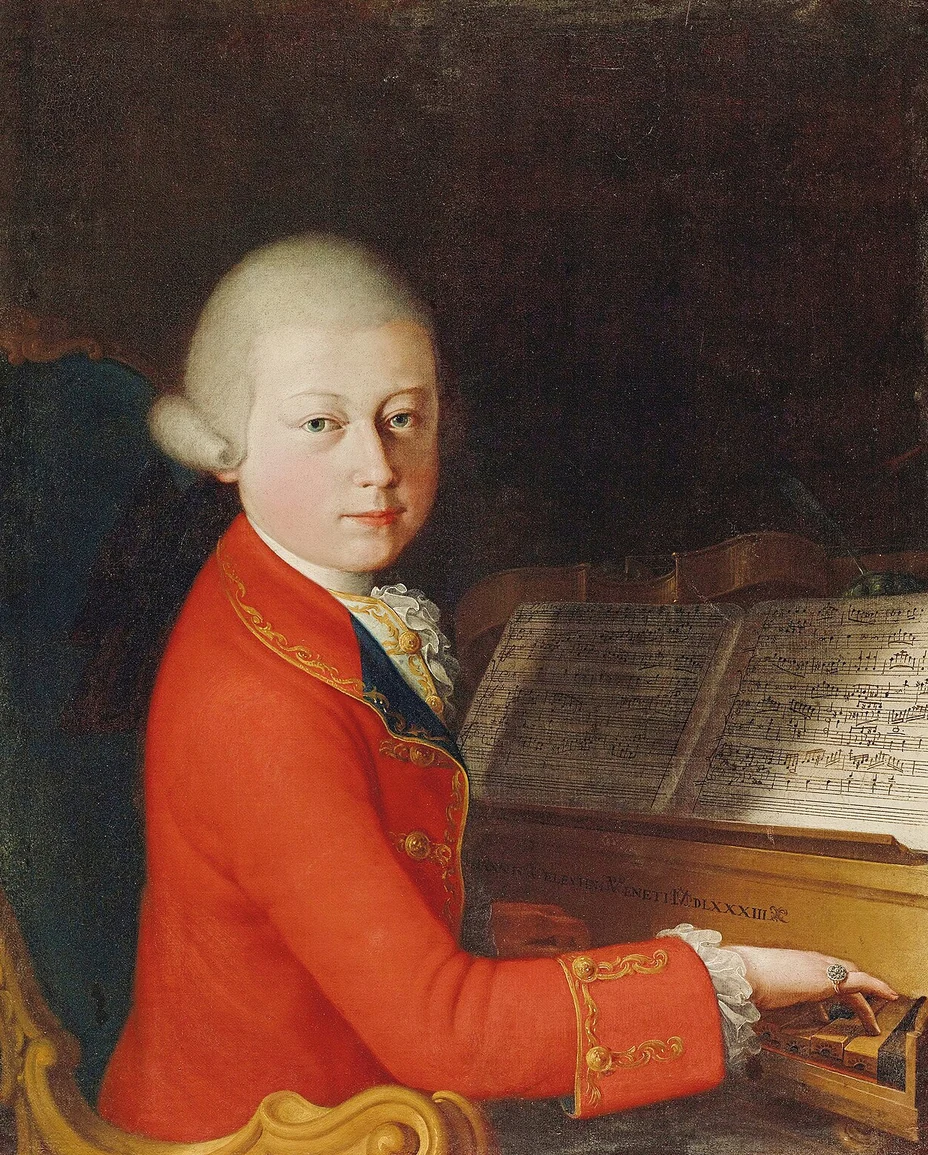
Mozart at 13, in VeronaPainting attributed to Saverio Dalla Rosa or Giambettino Cignaroli, 1770 Father and son set out for Italy on December 13, 1769. In Verona, on January 5, 1770, the thirteen-year-old gave his first Italian concert, and the newspapers praised it. During the stay Pietro Lugiati, an official of the Venetian Republic, had his portrait painted.
1770–73
MilanItaly
They arrived on January 23, 1770. Milan gave Mozart three opera commissions: “Mitridate, re di Ponto,” first performed on December 26, 1770, when he was fourteen; “Ascanio in Alba” in 1771; and “Lucio Silla” on December 26, 1772. In January 1773 he wrote the motet “Exsultate, jubilate” for Venanzio Rauzzini, the star of “Lucio Silla,” who sang it at the Theatine church on January 17. Hopes of a post at an Italian court came to nothing, and in March 1773 he left Italy for the last time.
Pieces from this place
Listen on Apple Music
- “Mitridate, re di Ponto,” K. 87: Overture1770, aged fourteen
- “Exsultate, jubilate,” K. 165first sung on January 17, 1773
1770
LodiItaly
In Lodi, on the road from Milan to Bologna, he completed his first string quartet on March 15, 1770.
Practicing one of these? Track it in Piano StreakPieces from this place
Listen on Apple Music
1770
BolognaItaly
In Bologna he met Padre Giovanni Battista Martini, who tested him with fugue exercises and later taught him counterpoint. He came back in the summer, and on October 9, 1770, he sat the examination of the Accademia Filarmonica and was admitted as a member. He was fourteen.
1770
FlorenceItaly
They arrived on March 30, 1770, and were received by the Grand Duke at the Palazzo Pitti. Wolfgang made friends with Thomas Linley, an English violinist of his own age, before the Mozarts left for Rome on April 6.
1770
RomeItaly
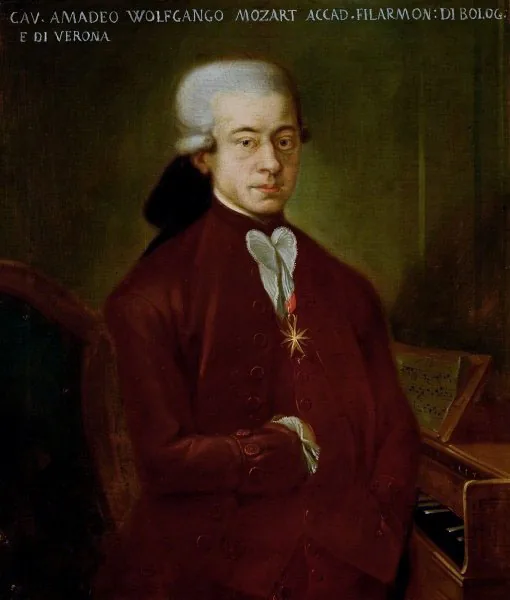
Mozart wearing the Order of the Golden SpurCopy by an unknown painter, made in 1777 for Padre Martini They reached Rome in Holy Week, on about April 11, 1770. In the Sistine Chapel Wolfgang heard Allegri’s “Miserere,” a work that had never been published, and wrote it down from memory afterward. On their way back from Naples that summer, the Pope made him a Knight of the Golden Spur.
1770
NaplesItaly
From May 14 to June 25, 1770, they stayed in Naples, where Wolfgang gave a concert on May 28.
1771
VeniceItaly
After “Mitridate” they traveled by way of Turin to Venice, stayed until March 12, 1771, and were home in Salzburg on March 28.
1773–1780
Salzburg: the Dance Master’s HouseAustria
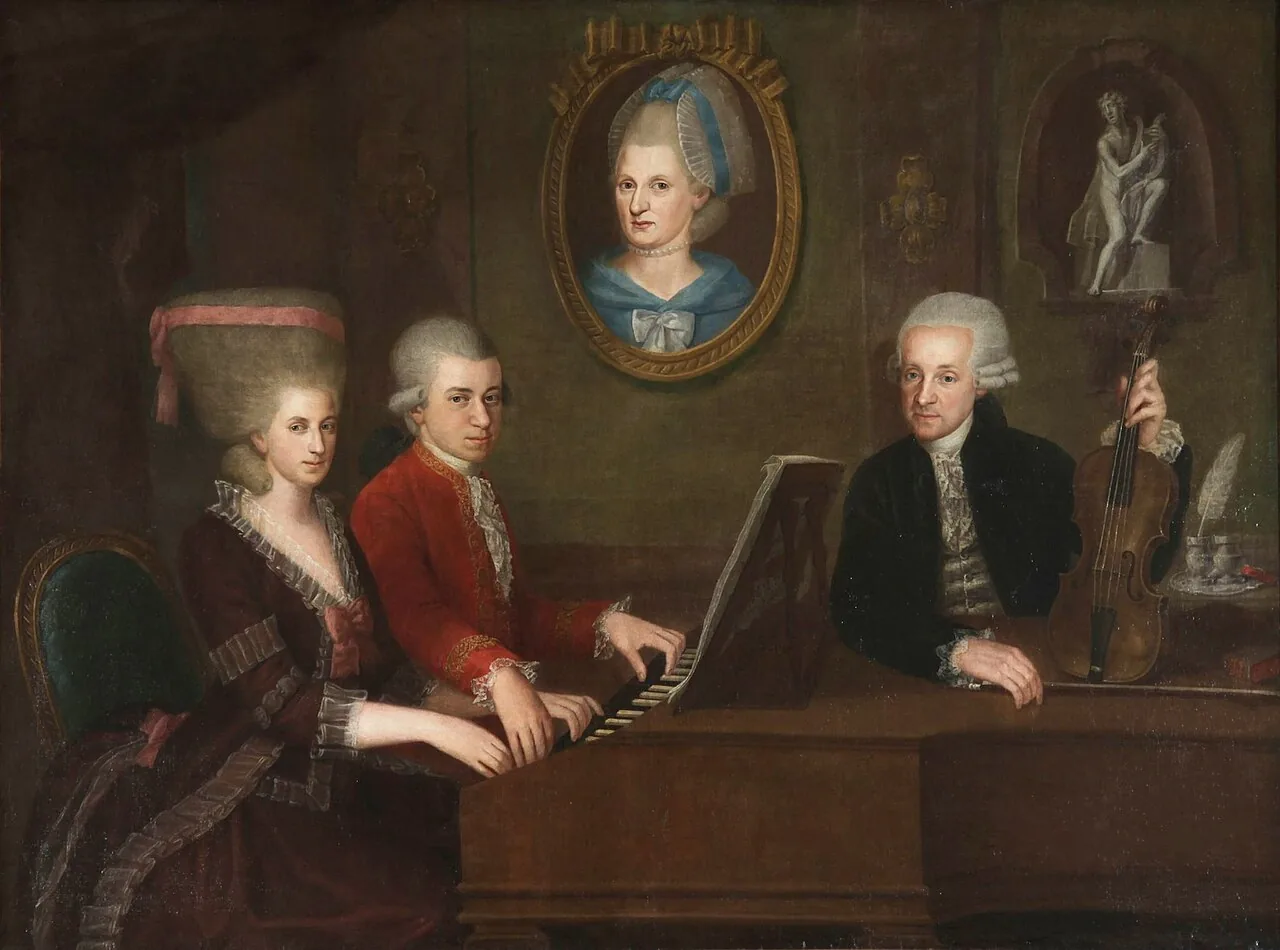
Nannerl, Wolfgang and Leopold Mozart; their mother’s portrait hangs on the wallPainting by Johann Nepomuk della Croce, about 1780 In 1773 the family moved across the river to a larger apartment, the Dance Master’s House on what is now Makartplatz. Mozart served the Prince-Archbishop, Hieronymus Colloredo, as concertmaster and later as court organist, and he wrote steadily: symphonies, the violin concertos of 1775, masses and serenades. But he felt confined in Salzburg, and in 1777 he left to look for a post elsewhere.
Pieces from this place
Listen on Apple Music
- Symphony No. 25 in G minor, K. 1831773
- Symphony No. 29 in A major, K. 2011774
- Violin Concerto No. 3 in G major, K. 2161775
- Violin Concerto No. 5 in A major, K. 2191775
- Piano Concerto No. 9 in E-flat major, K. 271January 1777
- Sinfonia concertante for violin and viola, K. 3641779
1775 · 1780–81
Munich: two operasGermany
Munich commissioned two operas from him. The comic opera “La finta giardiniera” was first given on January 13, 1775; during that stay he also wrote a piano sonata for Baron von Dürnitz. He came back to finish “Idomeneo,” first performed on January 29, 1781. It was from Munich that the Archbishop summoned him to Vienna.
Pieces from this place
Listen on Apple Music
- Piano Sonata No. 6 in D major, K. 284 (“Dürnitz”)1775
- “Idomeneo,” K. 366: Overturefirst performed on January 29, 1781
1777
AugsburgGermany
On September 23, 1777, he left Salzburg with his mother to look for a post. On October 11 they reached Augsburg, his father’s birthplace, where he became close to his cousin Maria Anna Thekla, the “Bäsle.”
1777–78
MannheimGermany
He reached Mannheim on October 30, 1777, and stayed four and a half months. Its court orchestra was the most admired in Europe, and he made close friends among the players. He also fell in love with the young singer Aloysia Weber; four years later he would marry her sister Constanze. No post was offered, and on March 14, 1778, he and his mother left for Paris.
Practicing one of these? Track it in Piano StreakPieces from this place
Listen on Apple Music
1778
Paris: his mother’s deathFrance
They reached Paris in the spring of 1778. His new symphony was applauded at the Concert Spirituel on June 18, but the city offered him little else. On July 3 his mother died after a short illness, and he had to break the news to his father. He left Paris in September and was back in Salzburg on January 15, 1779.
Pieces from this place
Listen on Apple Music
- Symphony No. 31 in D major, K. 297 (“Paris”)first performed in June 1778
- Piano Sonata No. 8 in A minor, K. 310summer 1778
- Concerto for Flute and Harp in C major, K. 299spring 1778
1781–84
Vienna: on his ownAustria
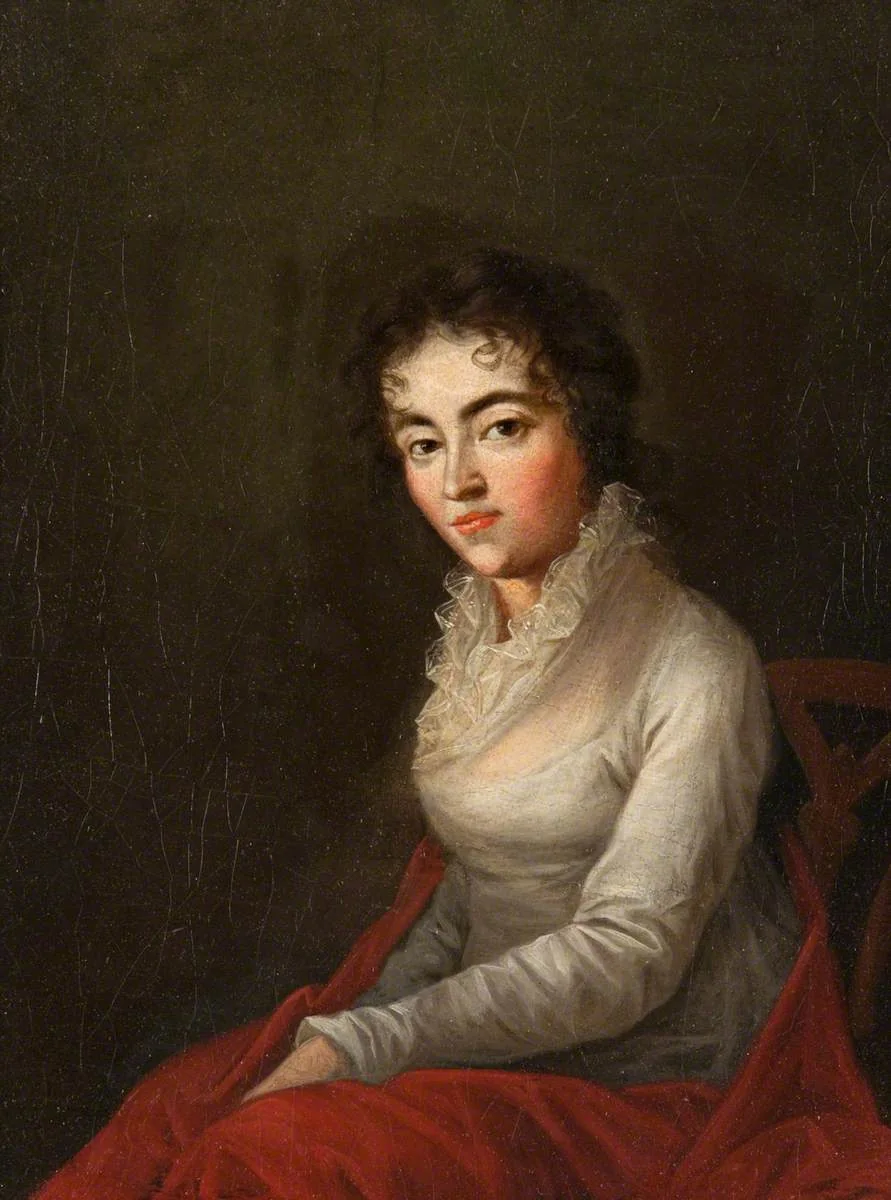
Constanze Mozart, his wifePainting by Joseph Lange, her brother-in-law Summoned by the Archbishop, he arrived in Vienna in March 1781. The quarrel with his employer came to a head in May, and in June he was dismissed, by his own account with a kick from the Archbishop’s steward, Count Arco. He stayed on as a freelance pianist, teacher and composer. “Die Entführung aus dem Serail” was a success on July 16, 1782, and on August 4 he married Constanze Weber in St. Stephen’s Cathedral.
Pieces from this place
Listen on Apple Music
- “Die Entführung aus dem Serail,” K. 384: Overturefirst performed on July 16, 1782
- Piano Sonata No. 11 in A major, K. 331 (with the “Turkish March”)about 1783
- Fantasia in D minor, K. 397thought to date from 1782
- Twelve Variations on “Ah, vous dirai-je, Maman,” K. 2651781–82
- Mass in C minor, K. 427left unfinished; first performed in Salzburg in 1783, with Constanze among the soloists
1783
LinzAustria
On the way home from a visit to Salzburg with Constanze, he stopped in Linz. When Count Thun heard he had arrived, he announced a concert; Mozart had no symphony with him, so he wrote one in four days. It was first played on November 4, 1783.
Pieces from this place
Listen on Apple Music
- Symphony No. 36 in C major, K. 425 (“Linz”)written in four days
- Piano Sonata No. 13 in B-flat major, K. 333thought to have been written on the same journey
1784–88
Vienna: the Figaro houseAustria
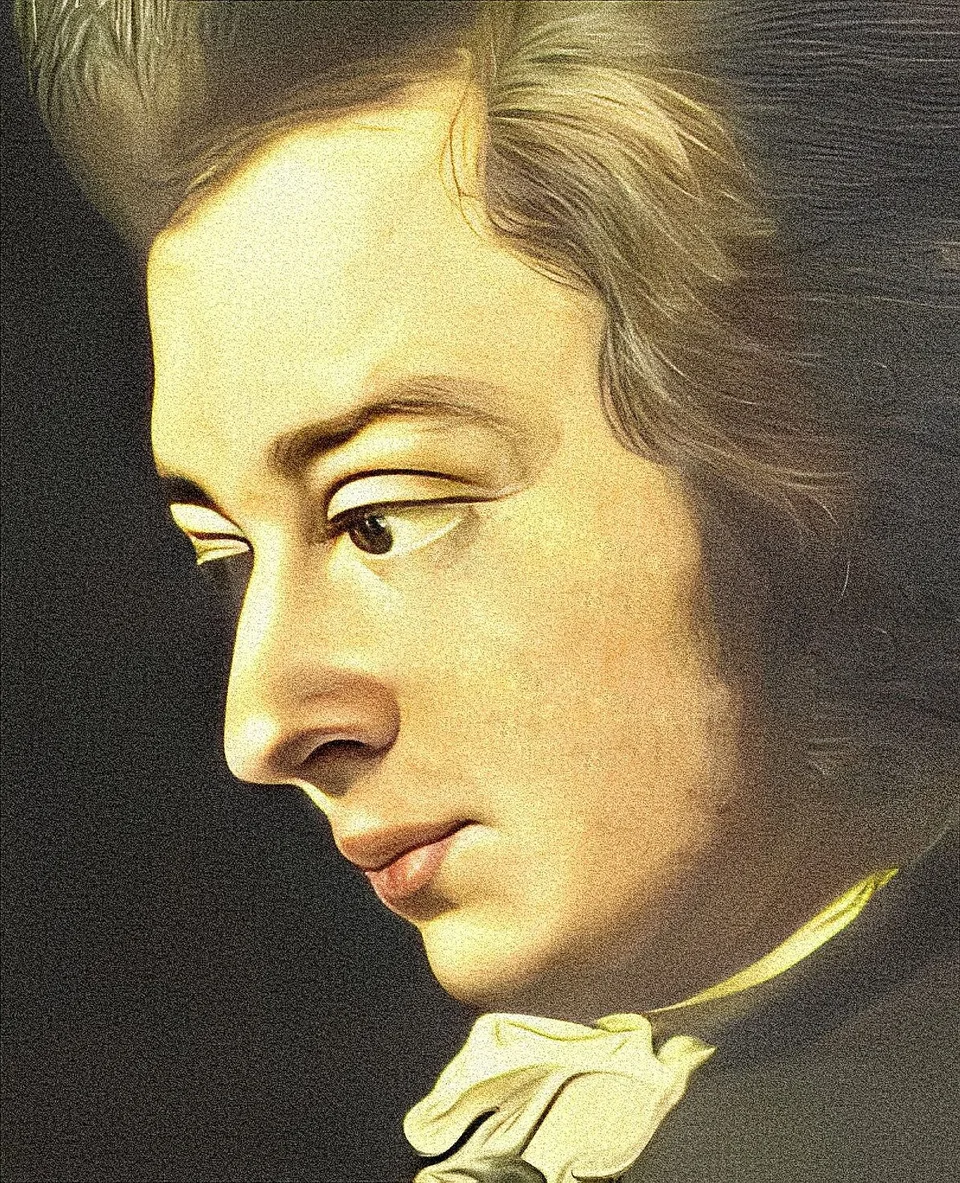
Mozart in his Vienna yearsUnfinished painting by Joseph Lange, his brother-in-law (detail) From 1784 to 1787 he lived in a large apartment at Domgasse 5, behind the cathedral, the only one of his Vienna homes still standing. These were his best years: new piano concertos for his own concerts season after season, the six quartets dedicated to Haydn, and on May 1, 1786, “Le nozze di Figaro.” In 1785 Haydn told Leopold Mozart that his son was the greatest composer he knew. In the summer of 1788, within about two months, he wrote his last three symphonies.
Pieces from this place
Listen on Apple Music
- Piano Concerto No. 20 in D minor, K. 4661785
- Piano Concerto No. 21 in C major, K. 4671785
- String Quartet No. 19 in C major, K. 465 (“Dissonance”)1785, one of the six dedicated to Haydn
- Piano Concerto No. 23 in A major, K. 4881786
- “Le nozze di Figaro,” K. 492: Overturefirst performed on May 1, 1786
- Rondo in A minor, K. 5111787
- “Eine kleine Nachtmusik,” K. 5251787
- Piano Sonata No. 16 in C major, K. 5451788; “for beginners,” as he entered it in his own catalog
- Symphony No. 40 in G minor, K. 550summer 1788
- Symphony No. 41 in C major, K. 551 (“Jupiter”)summer 1788
1787 · 1791
PragueCzech Republic
He arrived on January 11, 1787, in a city that had taken “Figaro” to its heart, and on January 19 he introduced the symphony now called the “Prague.” Prague then commissioned “Don Giovanni,” first performed on October 29, 1787, at what is now the Estates Theatre. He returned in 1791 with the coronation opera “La clemenza di Tito,” first given on September 6. The saying “My Praguers understand me” is attributed to him, but it cannot be traced to a source.
Pieces from this place
Listen on Apple Music
- Symphony No. 38 in D major, K. 504 (“Prague”)first performed on January 19, 1787
- “Don Giovanni,” K. 527: Overturefirst performed on October 29, 1787
- “La clemenza di Tito,” K. 621: Overturefirst performed on September 6, 1791
1789
DresdenGermany
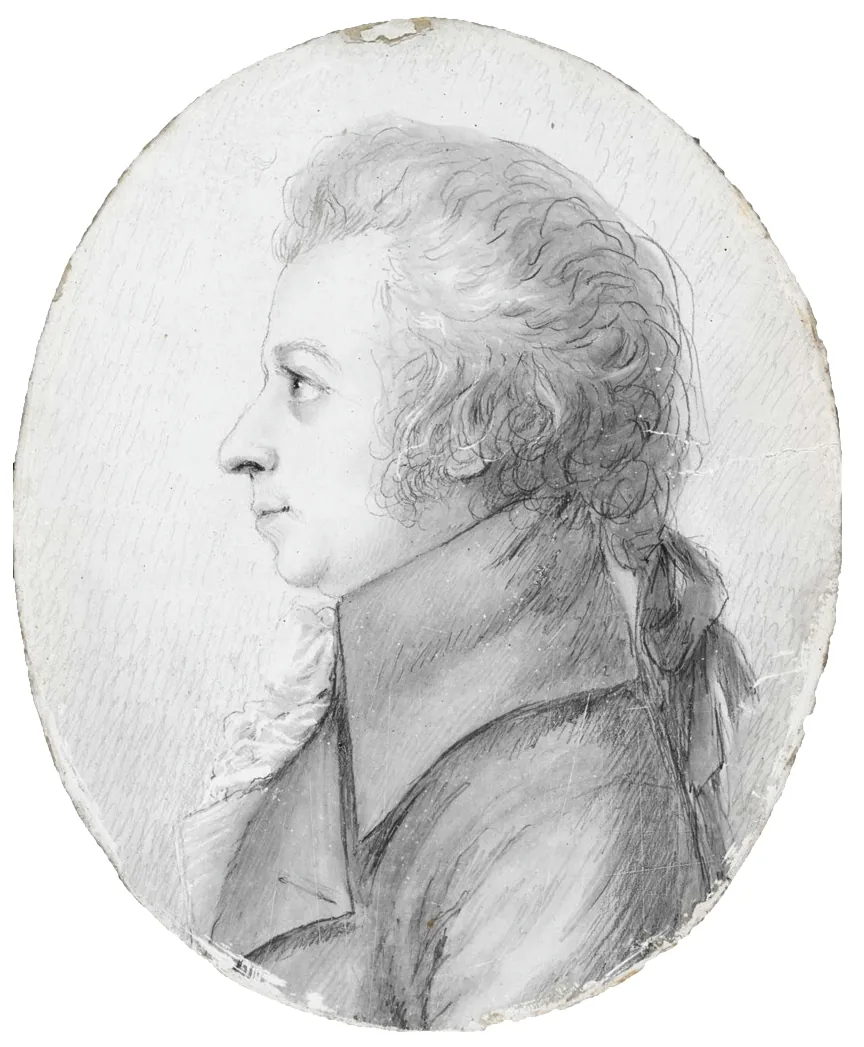
Mozart in Dresden, April 1789Silverpoint drawing by Dora Stock, 1789 On April 8, 1789, he set out for Berlin with Prince Karl Lichnowsky. In Dresden he played for the Elector of Saxony on April 14, took part in an organ and piano contest with Johann Wilhelm Hässler the next day, and sat for a portrait in silverpoint by Dora Stock.
1789
LeipzigGermany
He improvised on the organ of St. Thomas’s Church, where J. S. Bach had been cantor, and on May 12 gave a concert of his own works at the Gewandhaus; the hall was far from full. On May 16 he wrote a little gigue into the album of the court organist.
Practicing one of these? Track it in Piano StreakPieces from this place
Listen on Apple Music
1789
Potsdam and BerlinGermany
He reached Potsdam on April 25 and wrote a set of piano variations on a minuet by the King’s cellist, Jean-Pierre Duport. On May 26 he played before King Friedrich Wilhelm II and the Queen in Berlin; by his own account the King asked for string quartets and easy piano sonatas for his daughter. He was home in Vienna on June 4.
Pieces from this place
Listen on Apple Music
- Nine Variations on a Minuet by Duport, K. 573Potsdam, April 29, 1789
- Piano Sonata No. 18 in D major, K. 576written in Vienna after his return
1790
Frankfurt: the coronationGermany
In the autumn of 1790 he traveled to Frankfurt for the coronation of Emperor Leopold II, hoping to be noticed. He gave his concert on October 15 and played two of his piano concertos, but by then the new emperor and most of the dignitaries had left the city.
Pieces from this place
Listen on Apple Music
- Piano Concerto No. 26 in D major, K. 537 (“Coronation”)played on October 15, 1790
- Piano Concerto No. 19 in F major, K. 459played at the same concert
1791
Baden bei WienAustria
Constanze, expecting their sixth child, was taking the waters in this spa town south of Vienna. Visiting her on June 17, 1791, Mozart wrote the short motet “Ave verum corpus” for his friend Anton Stoll, the choirmaster of the parish church.
Practicing one of these? Track it in Piano StreakPieces from this place
Listen on Apple Music
1791
Vienna: the last yearAustria
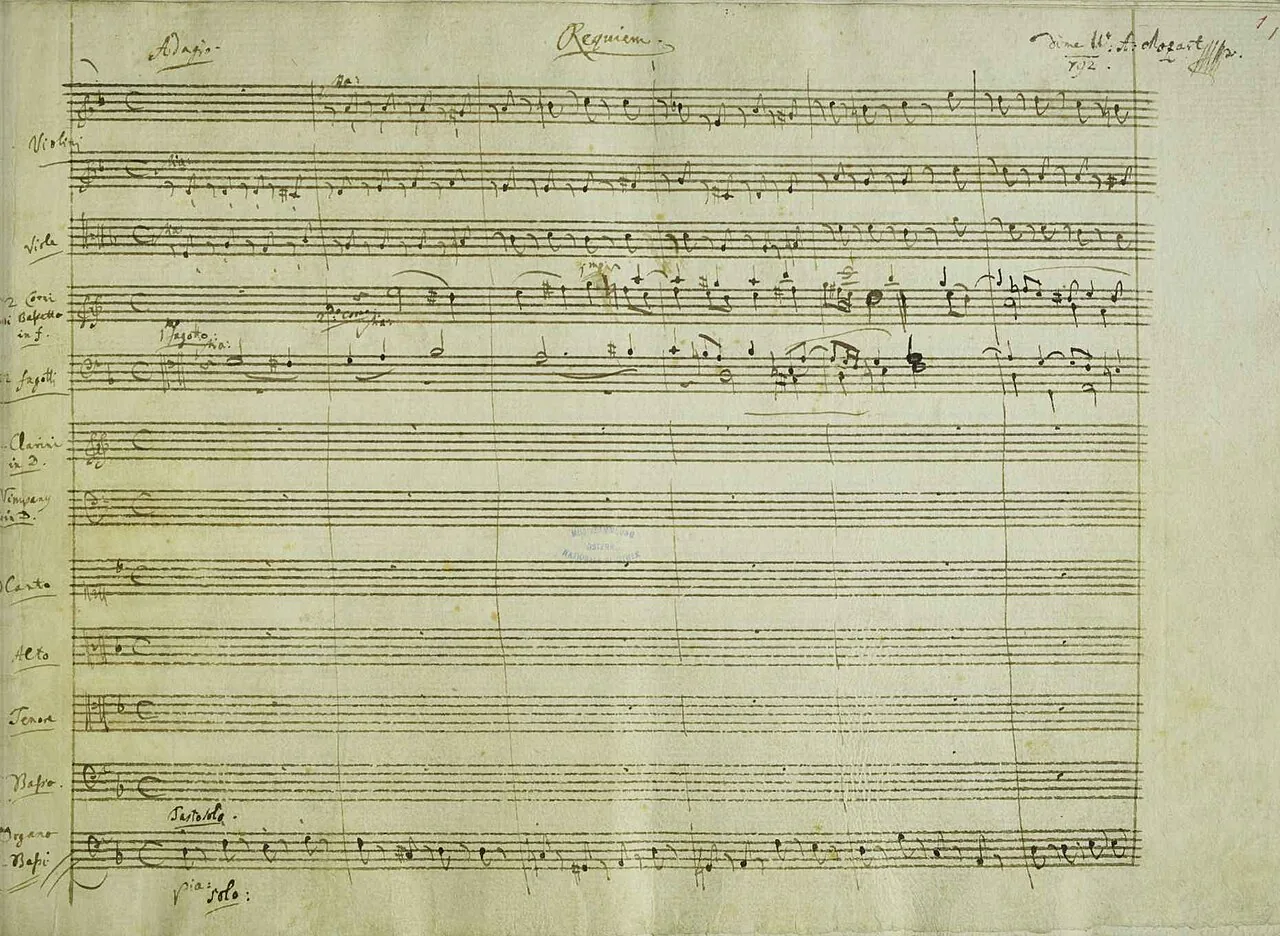
The first page of the Requiem in Mozart’s handAutograph manuscript, 1791 In his last year he wrote his final piano concerto, the Clarinet Concerto and “The Magic Flute,” first performed on September 30, 1791, at the Theater auf der Wieden. He was at work on a Requiem when he fell ill on November 20. He died at home just before one in the morning on December 5, aged 35, and was buried in St. Marx Cemetery in a common grave, the ordinary burial for a citizen of Vienna at the time. The Requiem was left unfinished.
Pieces from this place
Listen on Apple Music
- Piano Concerto No. 27 in B-flat major, K. 595his last piano concerto
- “The Magic Flute,” K. 620: Overturefirst performed on September 30, 1791
- Clarinet Concerto in A major, K. 622autumn 1791
- Requiem in D minor, K. 626unfinished
About this map
Mozart spent a large part of his life on the road; this page keeps to the main places and simplifies the routes between them. Sayings that cannot be traced to a source, such as “My Praguers understand me,” are described as such. The map shows today’s borders and country names; in Mozart’s time Salzburg was a state of its own, ruled by its archbishop, and Germany and Italy were made up of many smaller states. The K. numbers are those of the Köchel catalog of his works.
Sources
- Wolfgang Amadeus Mozart, Wikipedia (English)
- Mozart family grand tour, Wikipedia (English)
- Mozart in Italy, Wikipedia (English)
- Mozart and Prague, Wikipedia (English)
- Mozart’s Berlin journey, Wikipedia (English)
- Köchel catalogue (the date and place of each work), Wikipedia (English)
Pictures
All pictures are in the public domain, from Wikimedia Commons.
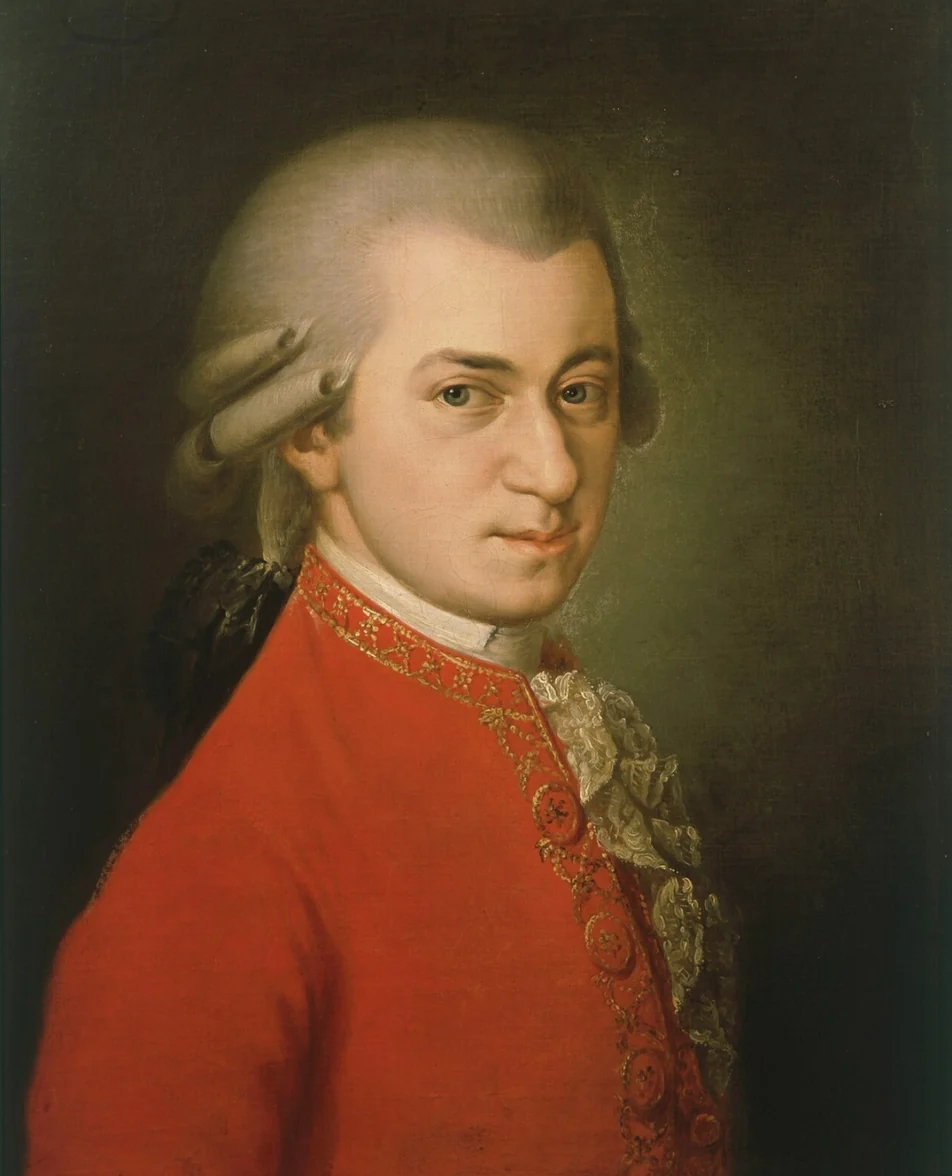
- Wolfgang Amadeus Mozart: Posthumous portrait by Barbara Krafft, 1819
- Mozart as a boy, in the court dress given to him in Vienna: Painting attributed to Pietro Antonio Lorenzoni, 1763
- Leopold, Wolfgang and Nannerl Mozart in Paris: Watercolor by Louis Carrogis Carmontelle, 1763
- Mozart at 13, in Verona: Painting attributed to Saverio Dalla Rosa or Giambettino Cignaroli, 1770
- Mozart wearing the Order of the Golden Spur: Copy by an unknown painter, made in 1777 for Padre Martini
- Nannerl, Wolfgang and Leopold Mozart; their mother’s portrait hangs on the wall: Painting by Johann Nepomuk della Croce, about 1780
- Constanze Mozart, his wife: Painting by Joseph Lange, her brother-in-law
- Mozart in his Vienna years: Unfinished painting by Joseph Lange, his brother-in-law (detail)
- Mozart in Dresden, April 1789: Silverpoint drawing by Dora Stock, 1789
- The first page of the Requiem in Mozart’s hand: Autograph manuscript, 1791
Recordings
Each play button opens one recording of the piece on Apple Music, chosen by us; longer works open on their first movement.
The performers: Ton Koopman, Rachel Podger and Gary Cooper, Karl Böhm and the Berlin Philharmonic, Christophe Rousset and Les Talens Lyriques, Barbara Bonney, Hagen Quartet, Anne-Sophie Mutter, Mitsuko Uchida, Itzhak Perlman and Pinchas Zukerman, Neville Marriner and the Academy of St Martin in the Fields, Emmanuel Pahud and Marie-Pierre Langlamet, Ingrid Haebler, John Eliot Gardiner and the Monteverdi Choir, Murray Perahia, Leonard Bernstein and the Bavarian Radio Chorus, Sabine Meyer, Karl Böhm and the Vienna Philharmonic
Piano Streak is not affiliated with Apple or with the performers. Apple Music is a trademark of Apple Inc.
Map data © OpenStreetMap contributors, tiles by OpenFreeMap, drawn with MapLibre.
Practicing Mozart?
Piano Streak keeps the time you spend on each piece, so you can see your practice add up day by day.