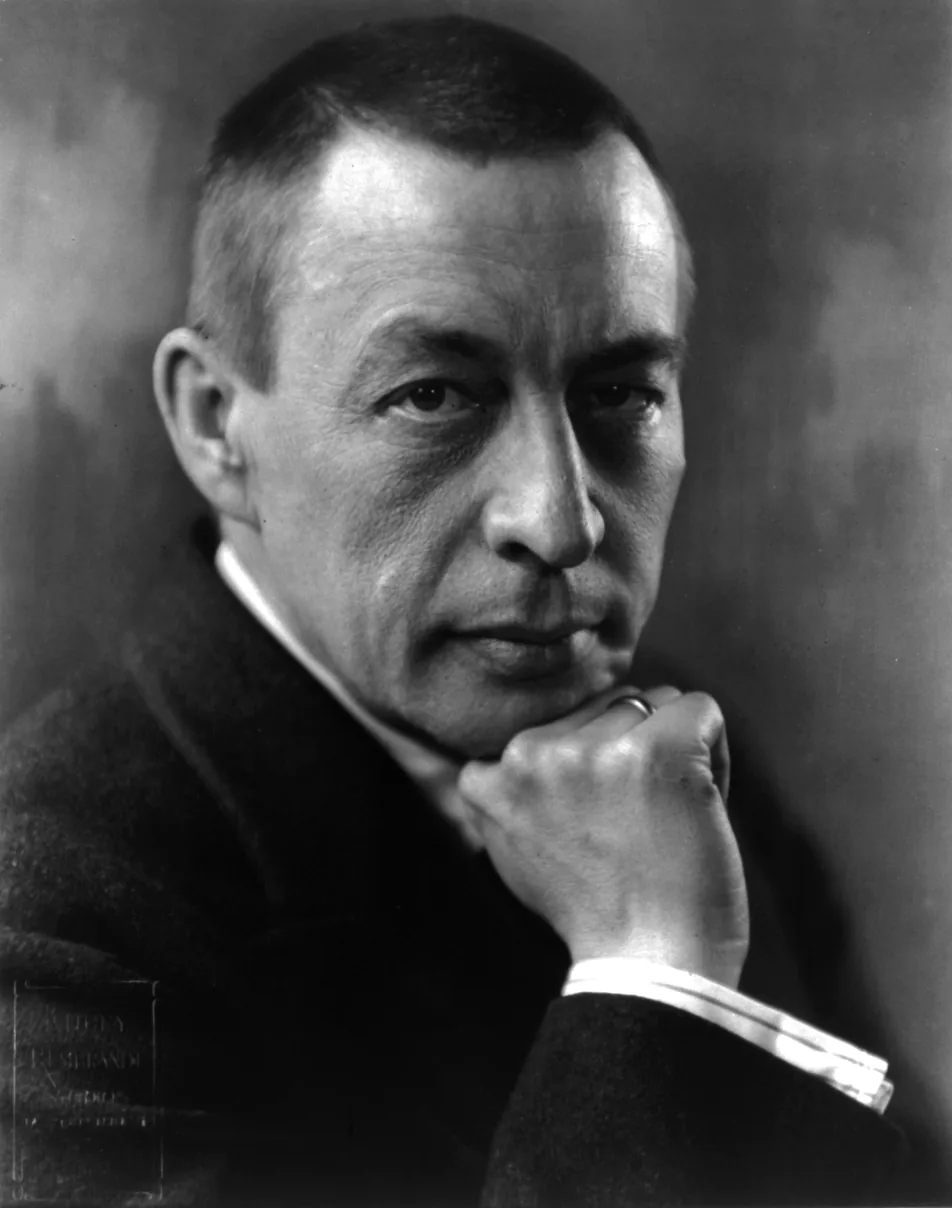
Rachmaninoff’s footprints
Sergei Vasilyevich RachmaninoffСергей Васильевич Рахманинов
1873–1943
From the Russian estates of his childhood, through Moscow, Dresden and New York, to his last home in Beverly Hills: the 28 places Rachmaninoff lived in and traveled to, and the pieces he wrote there.
Scroll to travel. The map moves to each place as you read.
- Where he lived or stayed
- A short visit
- The journey so far
- The road ahead
1873
Semyonovo: the family estateRussia
Sergei Vasilyevich Rachmaninoff was born on April 1, 1873 (March 20 by the calendar then used in Russia), on his family’s estate at Semyonovo, near Staraya Russa. His father, Vasily, was a retired army officer and an amateur pianist; his mother, Lyubov Butakova, a general’s daughter, had brought five estates to the marriage. Music ran in the family: his grandfather Arkady had taken lessons from the Irish composer John Field. In later life Rachmaninoff named Oneg, where he grew up, as his birthplace, but the church register at Semyonovo records the birth.
1877–82
Oneg: a childhood by the VolkhovRussia
When he was four the family moved to Oneg, an estate on the Volkhov River north of Novgorod, and he lived there until he was nine. His mother gave him his first piano lessons at four and noticed that he could play passages back from memory. At his grandfather’s suggestion she engaged Anna Ornatskaya, newly graduated from the Saint Petersburg Conservatory, who came to live with the family as his teacher. Meanwhile his father, who had wanted an army career for him, was selling the estates one after another to pay his debts. Oneg, the last, was auctioned in 1882.
1882–85
Saint Petersburg: the ConservatoryRussia
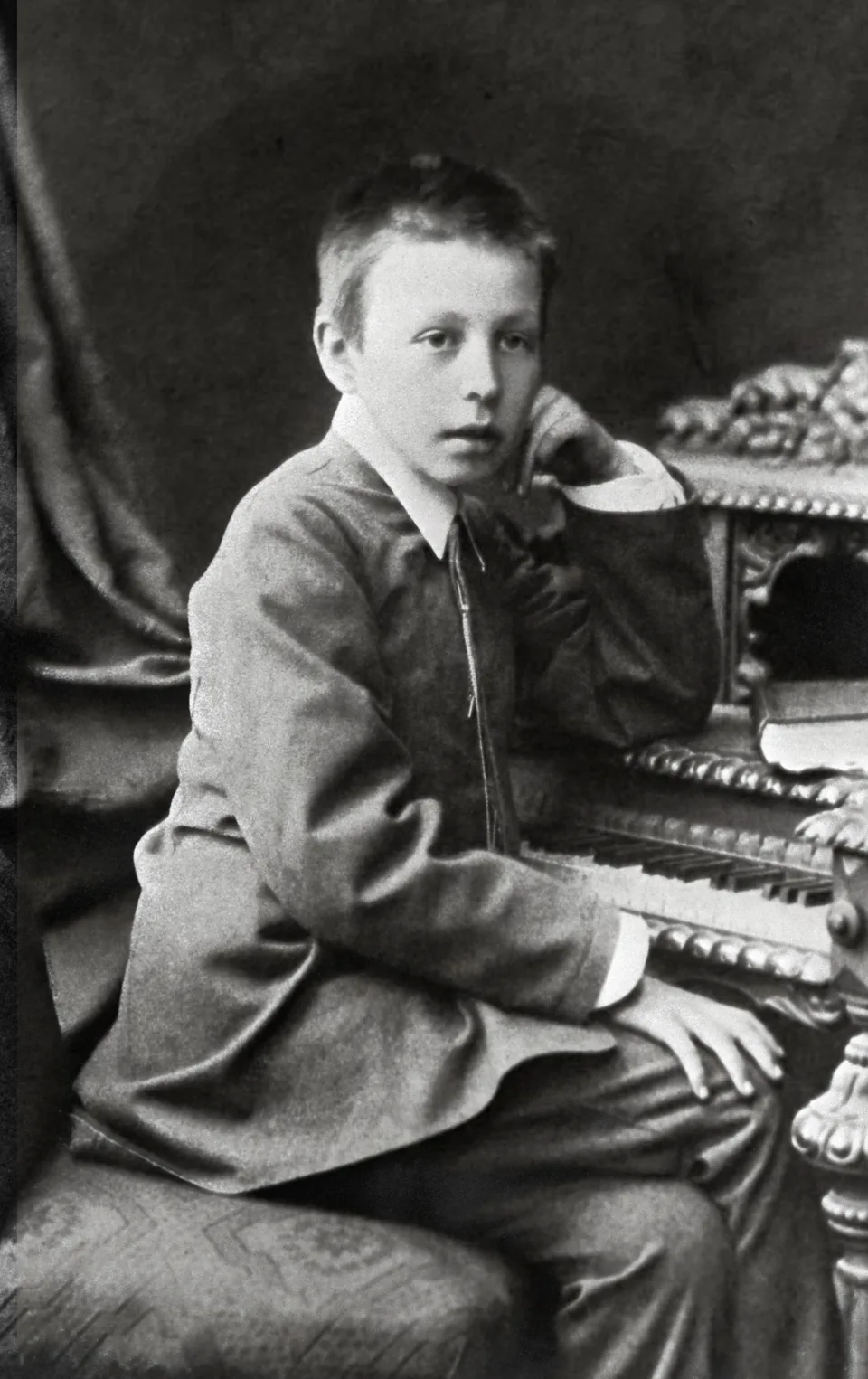
Rachmaninoff at about twelvePhotograph, 1885 The family moved into a small flat in Saint Petersburg, and in 1883, aged ten, Sergei entered the Conservatory. That year his sister Sofia died of diphtheria and his father left the family for Moscow. His grandmother Sofia Butakova stepped in; she took him to Orthodox services, where he first heard the chants and the bells that would sound through his music. He was a careless student: he skipped classes, failed his general subjects and altered his report cards. In 1885 he lost his sister Yelena, who had introduced him to Tchaikovsky’s music. That year his cousin Alexander Siloti, a pupil of Liszt, advised sending him to a stricter teacher, Nikolai Zverev in Moscow.
1885–92
Moscow: Zverev’s house and the ConservatoryRussia
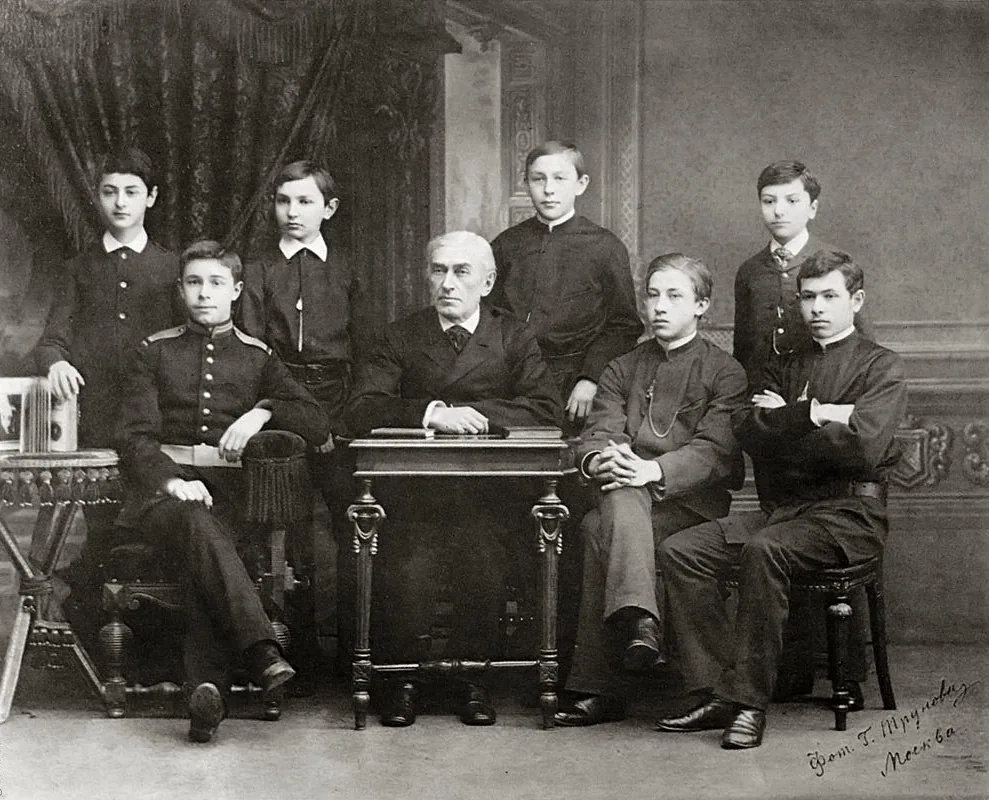
Nikolai Zverev with his pupils, among them Scriabin (in uniform) and RachmaninoffPhotograph, late 1880s In the autumn of 1885 he moved into Zverev’s home, where he lived for almost four years, sharing a room with other pupils and taking his turn at the piano for three hours a day. Alexander Scriabin was a fellow pupil. At the Conservatory he went on to study piano with Siloti, counterpoint with Sergei Taneyev and composition with Anton Arensky. When he asked for a room of his own to compose in, Zverev broke with him, and he went to live with his aunt’s family, the Satins. He took his final examinations a year early: for the one in composition he wrote the one-act opera “Aleko” in seventeen days, and in 1892 he graduated with the Great Gold Medal. Zverev, who sat on the examining board, gave him his own gold watch. That autumn he played a new prelude in C-sharp minor at the Moscow Electrical Exhibition. For the rest of his life audiences would call for it, shouting “C-sharp!”; he came to wish he had never written it.
Pieces from this place
Listen on Apple Music
- Trio élégiaque No. 1 in G minorJanuary 1892, written in four days
- “Aleko”: Intermezzo1892, his graduation piece; staged at the Bolshoi Theatre in May 1893
- Prelude in C-sharp minor, Op. 3 No. 2first played on October 8, 1892
- Élégie in E-flat minor, Op. 3 No. 11892
1890–95
Ivanovka: the first summersRussia
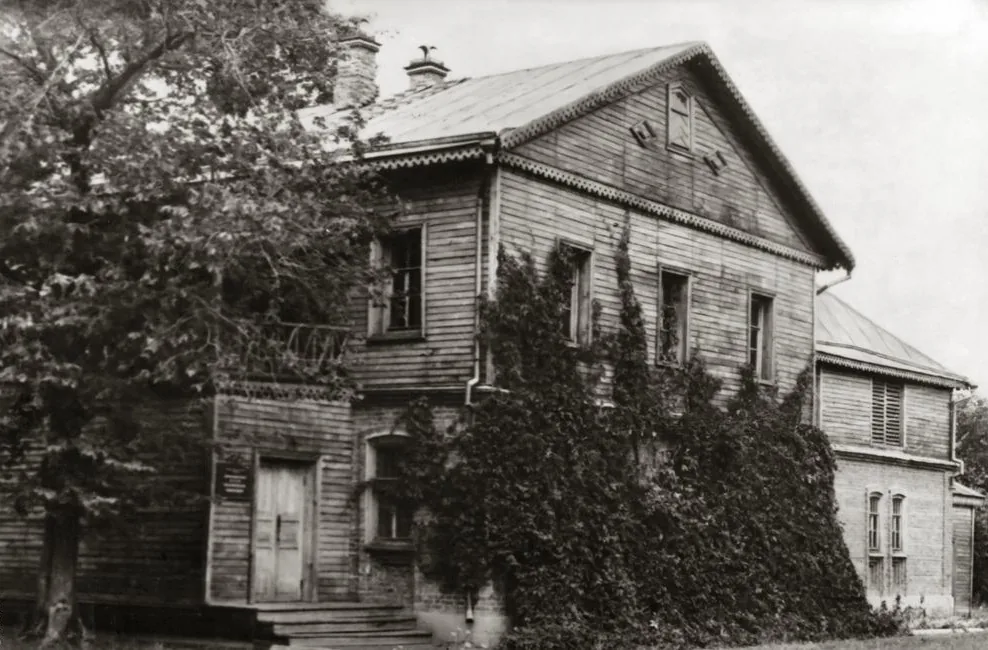
The house at IvanovkaPhotograph, early 20th century He spent the summer of 1890 with the Satins at Ivanovka, their country estate near Tambov, set among open fields, and he came back almost every year until 1917. The quiet suited him, and much of his music was written there. In July 1891 he finished his Opus 1, the First Piano Concerto, dedicated to Siloti; later that summer he caught malaria at Ivanovka and was ill for months. In 1895 he worked there on his First Symphony, seven and then ten hours a day, and had it finished and orchestrated when he left in October.
Pieces from this place
Listen on Apple Music
- Piano Concerto No. 1 in F-sharp minor, Op. 11891; revised in 1917
- Symphony No. 1 in D minor, Op. 131895
1893
LebedynUkraine
He spent the summer of 1893 with friends on an estate at Lebedyn, in what was then Kharkov province, and it was a productive one. Here he wrote his first suite for two pianos, the “Fantaisie-tableaux,” which he dedicated to Tchaikovsky.
Practicing one of these? Track it in Piano StreakPieces from this place
Listen on Apple Music
1893
KyivUkraine
In October 1893 he traveled to Kyiv (then Kiev) to conduct “Aleko,” and so missed the first performance of Tchaikovsky’s “Pathétique” Symphony in Saint Petersburg two days earlier. Tchaikovsky, who had praised “Aleko” and agreed to conduct Rachmaninoff’s tone poem “The Rock,” died on November 6.
1893–96
Moscow: in memory of TchaikovskyRussia
On the day he learned of Tchaikovsky’s death he began a second Trio élégiaque, inscribed “In Memory of a Great Artist,” and he had it finished before the year was out. The years that followed were lean. “Aleko” was dropped from the Bolshoi’s program, and he went back to giving piano lessons, which he hated; in late 1895 he walked out of a concert tour of Russia before it ended and had to pawn Zverev’s gold watch. In the autumn of 1896, after money entrusted to him was stolen on a train, he wrote the Six moments musicaux in a matter of weeks to make good the loss.
Pieces from this place
Listen on Apple Music
- Trio élégiaque No. 2 in D minor, Op. 91893, in memory of Tchaikovsky
- Six moments musicaux, Op. 16 (No. 4 in E minor)autumn 1896
1897
Saint Petersburg: the First SymphonyRussia
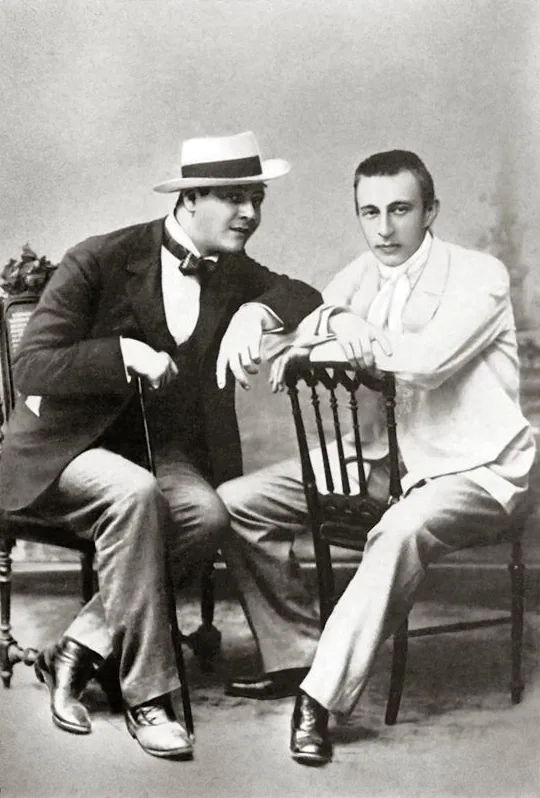
Feodor Chaliapin (left) and RachmaninoffPhotograph, 1890s On March 28, 1897, Alexander Glazunov conducted the first performance of the First Symphony at one of the Russian Symphony Concerts. It was a disaster. The orchestra was under-rehearsed, and the composer César Cui wrote that the piece would delight the inmates of a conservatory in hell. Rachmaninoff blamed the performance, but the failure silenced him: for three years he composed almost nothing, and the symphony was not played again in his lifetime. That autumn the industrialist Savva Mamontov made him assistant conductor of his private opera company in Moscow. There he met the bass Feodor Chaliapin, who remained a friend for life.
1899
LondonUnited Kingdom
In the spring of 1899 he went abroad to perform for the first time, playing and conducting his own music in London to good reviews. He had been expected to bring a second piano concerto but could not finish one, and the pieces he promised for a return visit were never written.
1900–06
Moscow: the Second ConcertoRussia
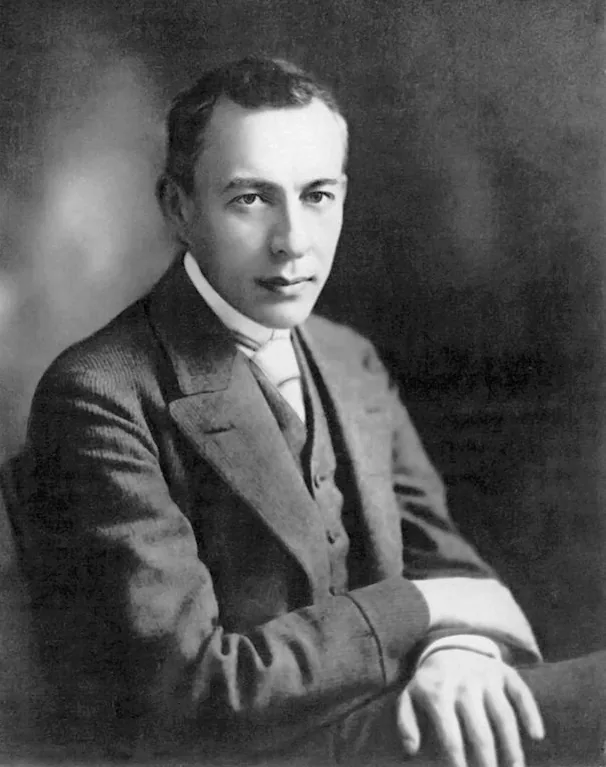
Rachmaninoff around the time of the Second ConcertoPhotograph, about 1901 From January to April 1900 he went every day to the physician Nikolai Dahl, an amateur musician, whose treatment was meant to restore his sleep, his appetite and his will to compose. That summer, staying in Italy with Chaliapin, he felt new ideas begin to stir. The second and third movements of a new piano concerto were ready by December; he added the first movement in the spring and played the whole work in Moscow on November 9, 1901, with Siloti conducting. He dedicated it to Dahl. A cello sonata followed within weeks. On May 12, 1902, he married his cousin Natalia Satina in an army chapel, because the Church forbade marriage between first cousins. From 1904 to 1906 he conducted at the Bolshoi Theatre, which staged his operas “The Miserly Knight” and “Francesca da Rimini.”
Pieces from this place
Listen on Apple Music
- Piano Concerto No. 2 in C minor, Op. 181900–01; dedicated to Nikolai Dahl
- Cello Sonata in G minor, Op. 191901
- Prelude in G minor, Op. 23 No. 51901
- Variations on a Theme of Chopin, Op. 221902–03
- Prelude in D major, Op. 23 No. 41903
1906–09
Dresden: three quiet wintersGermany
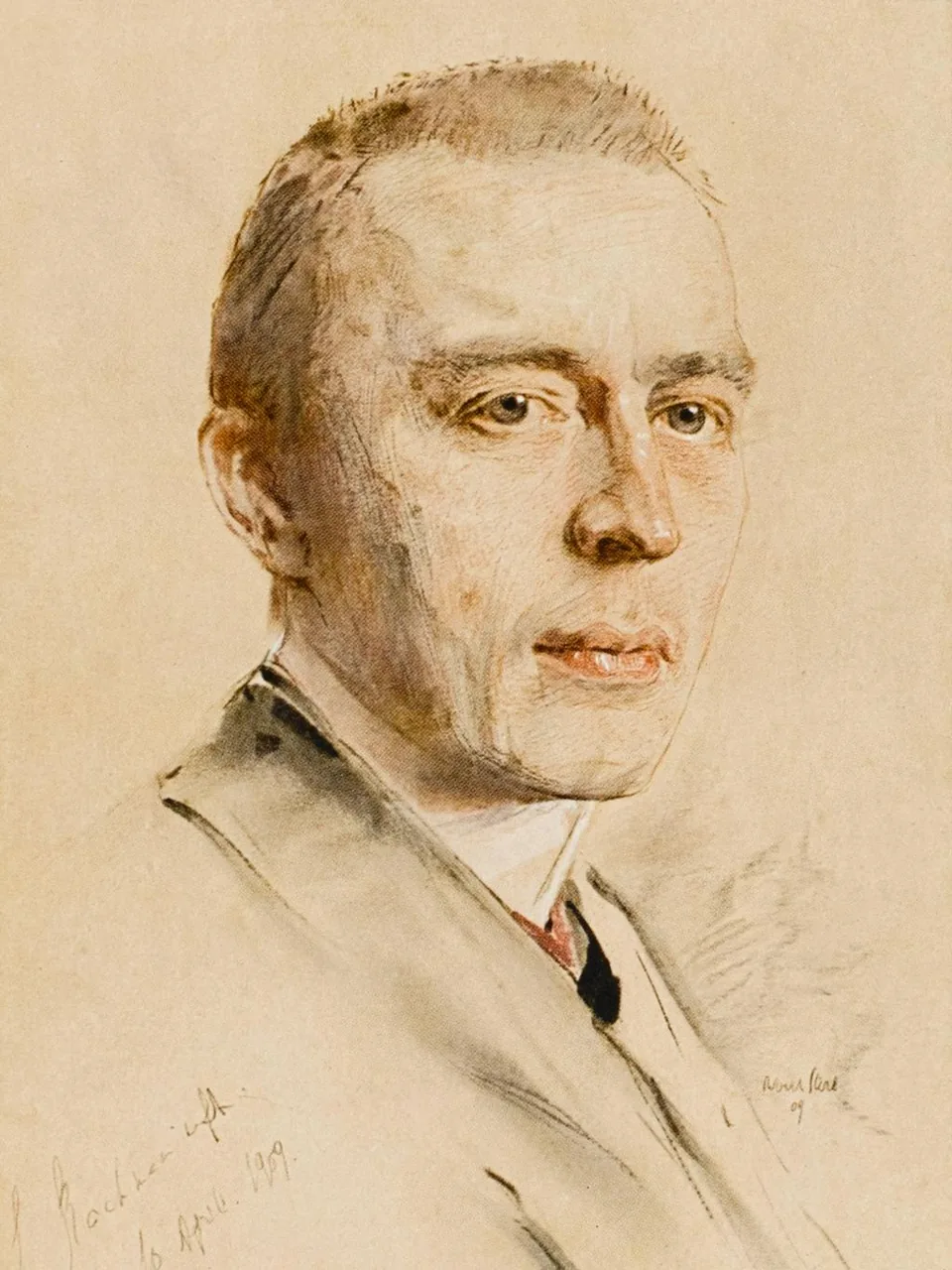
Rachmaninoff in 1909Drawing by Robert Sterl, 1909 In November 1906, weary of the unrest in Russia and of a social life that left him no time to write, he took his wife and daughter to Dresden. “We live here like hermits,” he wrote: “we see nobody, we know nobody, and we go nowhere.” They stayed until 1909, going home only for the summers at Ivanovka, and he wrote steadily: the Second Symphony, which he conducted to great applause in Saint Petersburg in early 1908, the First Piano Sonata, and the tone poem “Isle of the Dead.”
Pieces from this place
Listen on Apple Music
- Symphony No. 2 in E minor, Op. 271906–07
- Piano Sonata No. 1 in D minor, Op. 281907–08
- “Isle of the Dead,” Op. 29early 1909
1907
ParisFrance
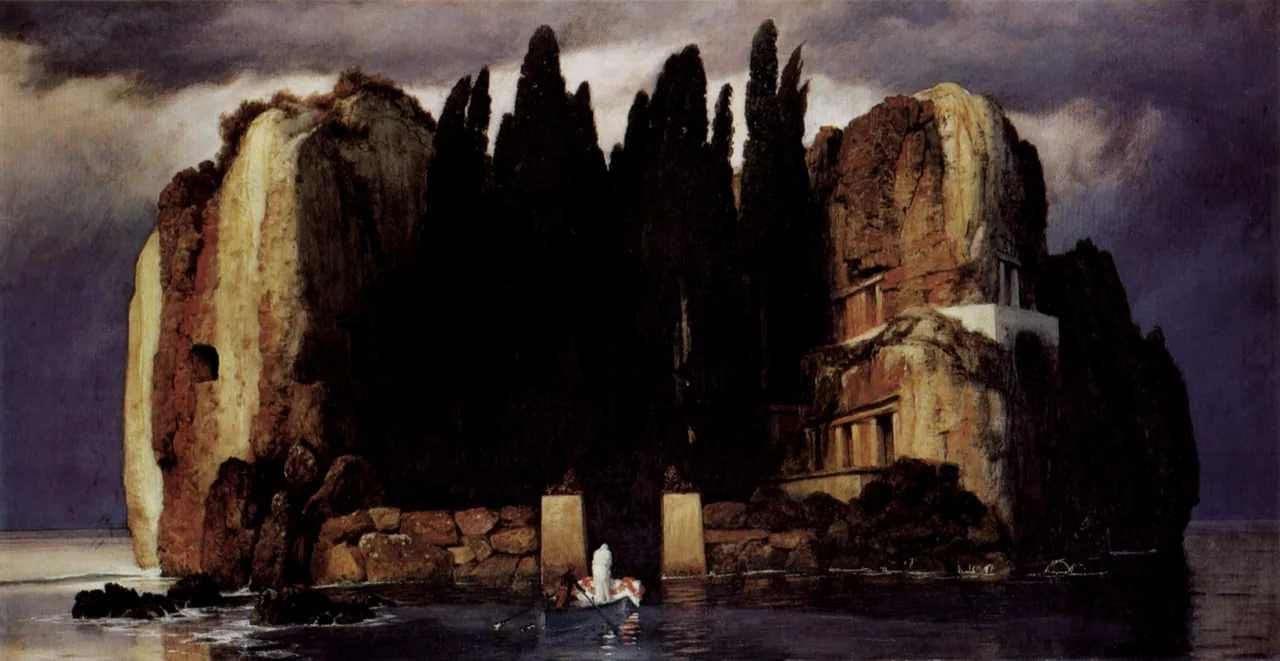
“Isle of the Dead”Painting by Arnold Böcklin, the version of 1886 (Leipzig) In May 1907 he played his Second Concerto in Sergei Diaghilev’s season of Russian concerts, with the C-sharp minor Prelude as an encore; it was a triumph. In Paris he also saw a black-and-white reproduction of Arnold Böcklin’s painting “Isle of the Dead,” the seed of his tone poem. When he later saw the painting itself he was disappointed, and said that had he seen the original first he would probably not have written the music.
1909–11
Ivanovka: the summer workshopRussia
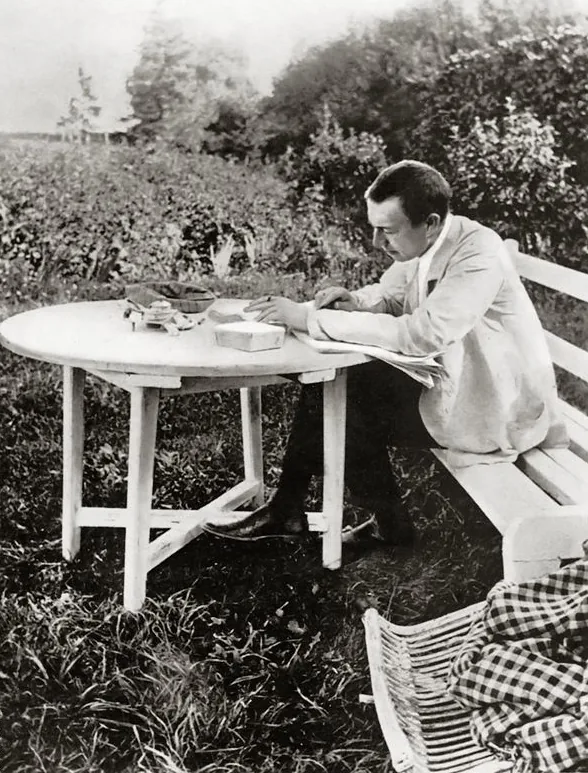
Rachmaninoff at Ivanovka, correcting the proofs of the Third ConcertoPhotograph, 1910 At their wedding the couple had been given the smaller of the two houses at Ivanovka, and the summers there were his season for composing. In the summer of 1909 he wrote the Third Piano Concerto for his first American tour; he finished the score in Moscow that autumn and practiced the solo part on a silent keyboard during the crossing. In July 1910 he wrote the Liturgy of St. John Chrysostom (“Not for a long time have I written anything with such pleasure”), and a few weeks later the thirteen Preludes, Op. 32. The first set of Études-Tableaux followed in August and September 1911.
Pieces from this place
Listen on Apple Music
- Piano Concerto No. 3 in D minor, Op. 30summer 1909; dedicated to Josef Hofmann
- Liturgy of St. John Chrysostom, Op. 31July 1910
- Prelude in G major, Op. 32 No. 51910
- Prelude in G-sharp minor, Op. 32 No. 121910
- Études-Tableaux, Op. 33 (No. 2 in C major)1911
1909
Northampton: Smith CollegeUnited States
His first appearance in the United States was a recital at Smith College in Northampton, Massachusetts, on November 4, 1909. The tour that followed took in 26 concerts, 19 as a pianist and 7 as a conductor.
1909–10
New York: the Third ConcertoUnited States
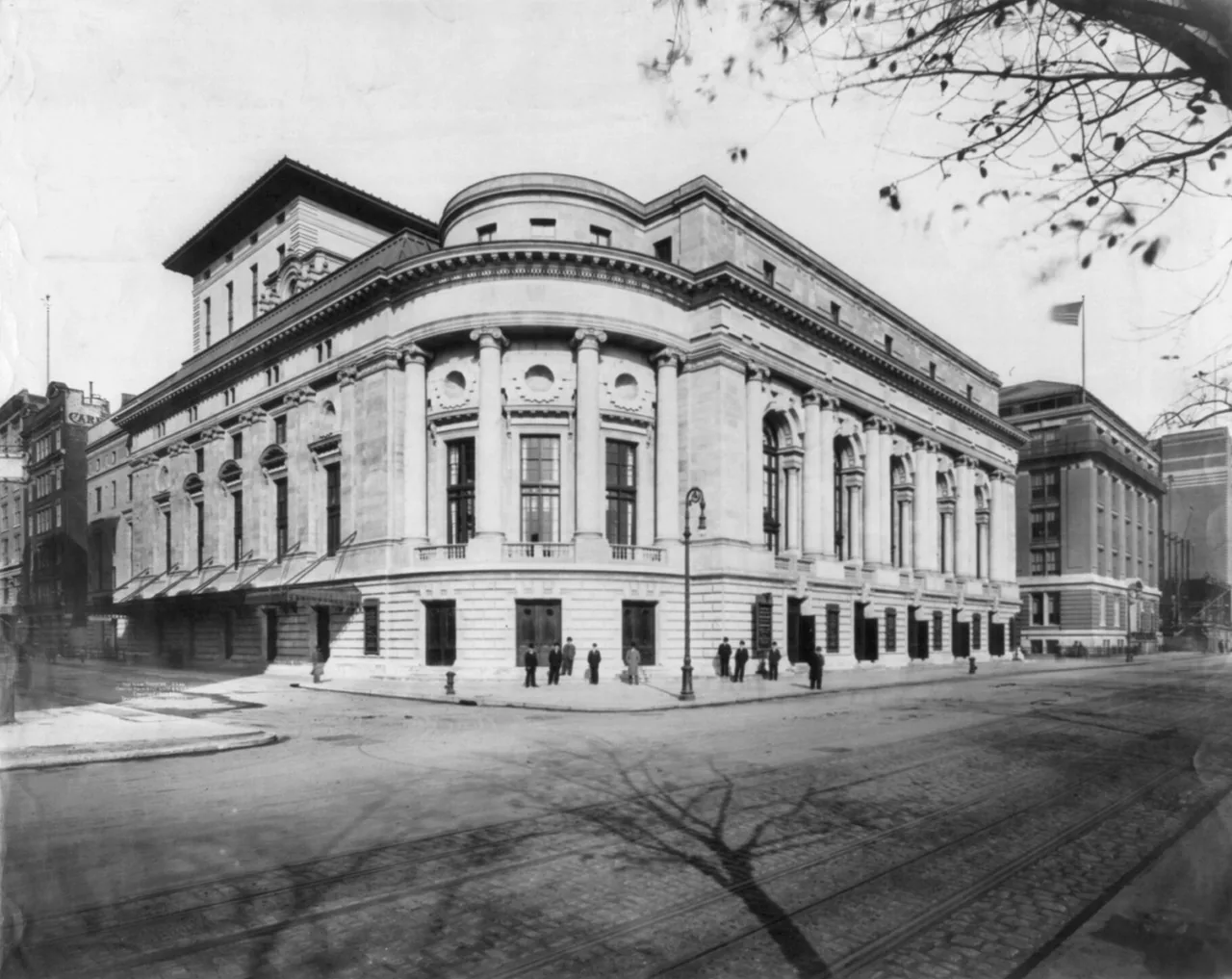
The New Theatre on Central Park West, New YorkPhotograph, 1909 (Library of Congress) On November 28, 1909, he gave the first performance of the Third Concerto at the New Theatre, with Walter Damrosch conducting the New York Symphony. On January 16, 1910, he played it again at Carnegie Hall with the New York Philharmonic under Gustav Mahler, the only concert the two ever gave together and one he treasured. America wanted him back, but he turned the offers down: the tours kept him too long from Russia and from his family. He was home in February 1910.
1913
Rome: Piazza di SpagnaItaly
Exhausted by conducting and committee work in Moscow, he took his family abroad, and after a month in Switzerland they settled in Rome. He worked alone in a small apartment on Piazza di Spagna, in a house where Tchaikovsky had once composed, while his family stayed at a boardinghouse. An anonymous letter brought him a Russian translation of Edgar Allan Poe’s poem “The Bells,” and he began a choral symphony on it. He also started his Second Piano Sonata. The stay ended abruptly when both his daughters caught typhoid; they were treated in Berlin, and he finished the sonata back at Ivanovka.
Pieces from this place
Listen on Apple Music
- “The Bells,” Op. 351913, on a poem by Edgar Allan Poe
- Piano Sonata No. 2 in B-flat minor, Op. 361913, finished at Ivanovka; revised in 1931
1913–17
Moscow: the last years in RussiaRussia
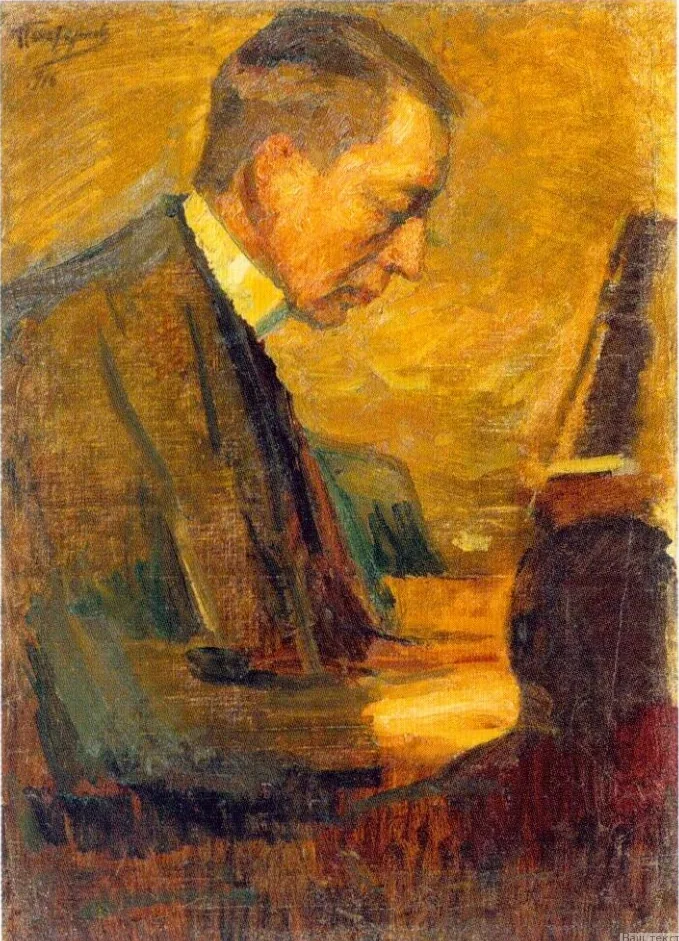
Rachmaninoff at the pianoPainting by Leonid Pasternak, 1916 He conducted the first performance of “The Bells” in Saint Petersburg in late 1913. Early in 1915, in less than two weeks, he wrote the All-Night Vigil for unaccompanied choir; its first performance in Moscow on March 23, given in aid of war relief, was so well received that four more were arranged at once. That April his old classmate Scriabin died, and Rachmaninoff toured with recitals of Scriabin’s music for the benefit of his widow, the first time he had played anyone’s works but his own in public. The wordless “Vocalise” dates from the same year, the second set of Études-Tableaux from 1916–17. In the spring of 1917, two months after the revolution began, he went to Ivanovka for the last time, found the estate seized, and left after three weeks. That autumn, with the October Revolution being fought in the streets outside, he sat in his Moscow apartment revising the First Concerto.
Pieces from this place
Listen on Apple Music
- All-Night Vigil, Op. 37 (No. 6, “Bogoroditse Devo”)early 1915
- Vocalise, Op. 34 No. 141915; dedicated to the soprano Antonina Nezhdanova
- Études-Tableaux, Op. 39 (No. 5 in E-flat minor)1916–17
1917
YaltaCrimea
After a summer break with his family in the Crimea, which was calmer than Moscow, he played in Yalta in September 1917. It was his last concert in Russia.
1917
StockholmSweden
An invitation to give ten recitals in Scandinavia gave him a reason to ask for permits to leave. In late December 1917 the family took a train from Petrograd, as Saint Petersburg was then called, crossed Finland by sled and by rail with what fitted into their small suitcases, and reached Stockholm on Christmas Eve. He never saw Russia again.
1918
Copenhagen: starting again at 44Denmark
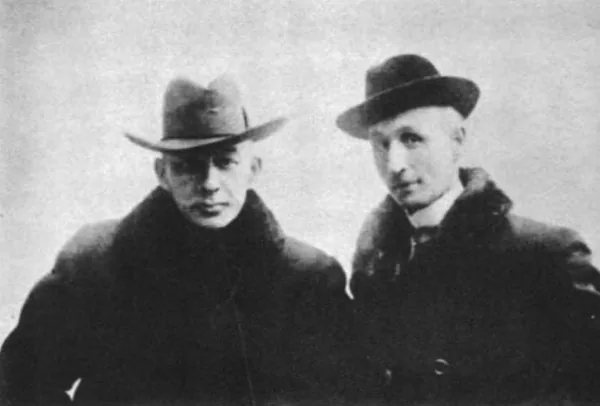
Rachmaninoff (left) with Nikolai StruvePhotograph, 1918 In January 1918 the family settled on the ground floor of a house in Copenhagen, with the help of his friend, the composer Nikolai Struve. He was 44 and in debt. Composing alone could not support a family, so he decided to earn his living as a concert pianist; his repertoire was small, and he set about practicing every day and learning new pieces. He toured Scandinavia from February to October. Three offers came from the United States. He refused them all, then changed his mind, and on November 1, 1918, the family sailed from Norway for New York on money lent by friends.
1918–42
New York: Riverside DriveUnited States
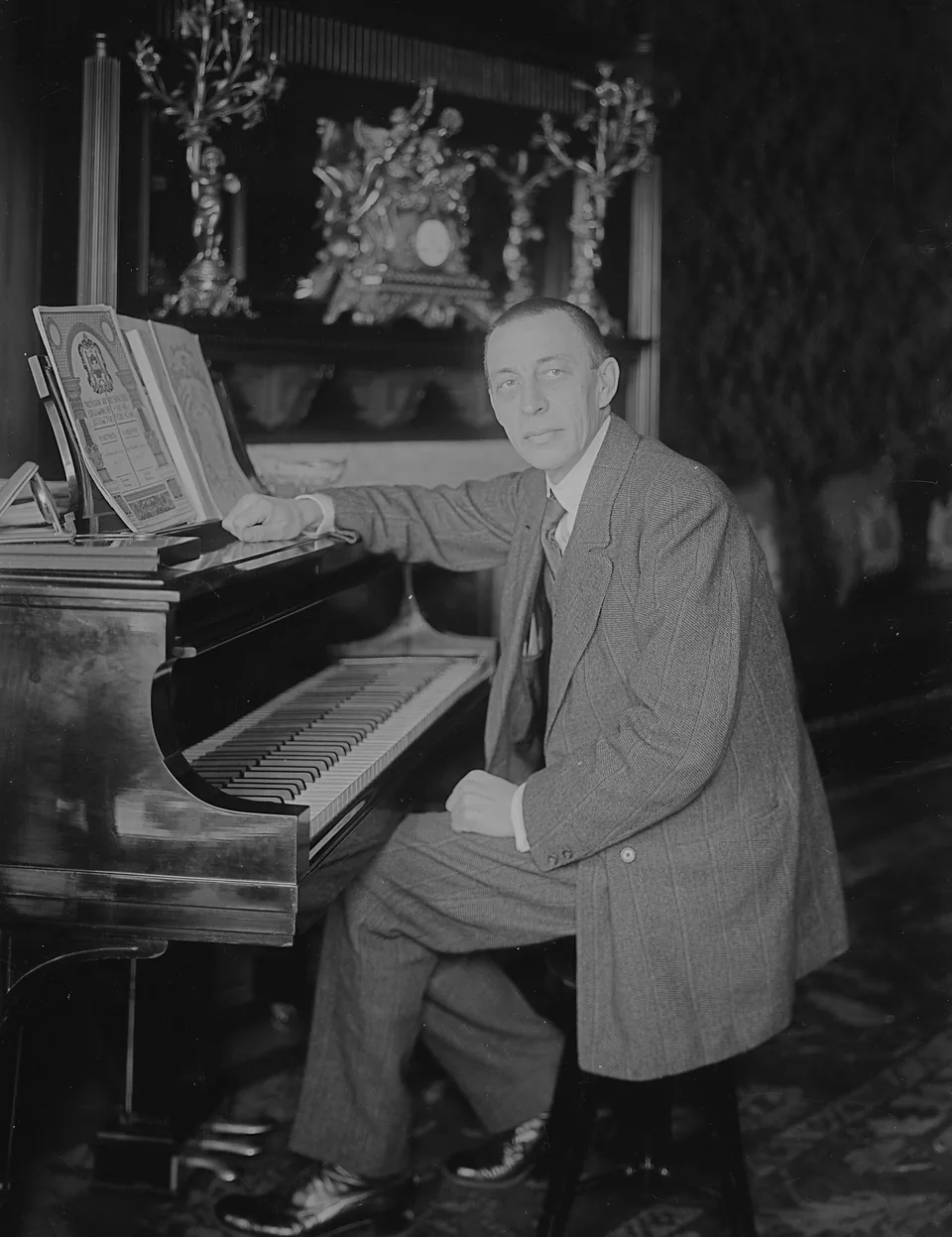
Rachmaninoff at the pianoPhotograph by Bain News Service (Library of Congress) He landed in New York in November 1918 and gave his first recital on December 8, in Providence, still recovering from the Spanish flu. Of all the piano makers who courted him he chose Steinway, the only one that offered him no money. In 1920 he signed with the Victor record company, and in 1921 he bought an apartment at 33 Riverside Drive, overlooking the Hudson, where the family kept Russian servants, Russian guests and Russian customs. Season after season he toured, one winter giving 71 concerts in five months, and he wrote very little: six new works in twenty-four years. “Losing my country,” he said, “I lost myself also.” In 1926 he took a year off and finished the Fourth Piano Concerto.
Pieces from this place
Listen on Apple Music
- “Liebesleid” (after Fritz Kreisler)1921, his piano version of Kreisler’s violin piece
- Piano Concerto No. 4 in G minor, Op. 401926; dedicated to Nikolai Medtner
1927–41
Philadelphia: the Academy of MusicUnited States
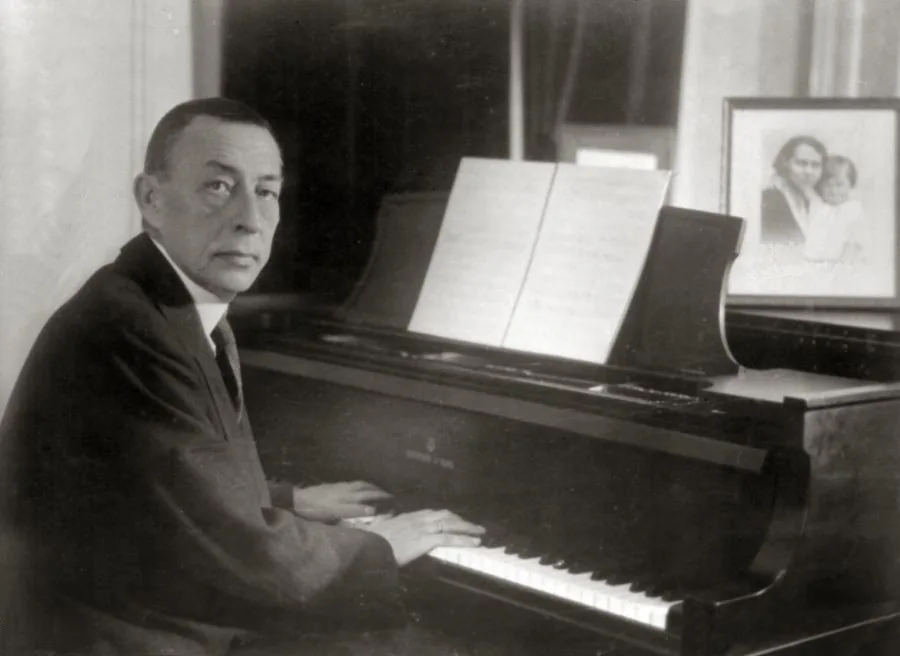
Rachmaninoff at the pianoPhotograph, 1936 The Philadelphia Orchestra introduced most of the music he wrote after leaving Russia. With Leopold Stokowski conducting, it gave the first performances of the Fourth Concerto here on March 18, 1927, of the Paganini Rhapsody in 1934 (on a visit to Baltimore) and of the Third Symphony in 1936. Under Eugene Ormandy it introduced the Symphonic Dances, which are dedicated to the orchestra and its conductor, on January 3, 1941. He also made records with the orchestra at the Academy of Music, conducting “Isle of the Dead” and the Third Symphony and playing the solo part in his First and Third Concertos.
1929–31
Clairefontaine: summers in FranceFrance
From 1929 to 1931 he spent his summers at a villa called Le Pavillon in Clairefontaine-en-Yvelines, in the forest of Rambouillet, among his daughters and other Russian émigrés. In the summer of 1931 he wrote the Variations on a Theme of Corelli here, the only piece he composed in France, and revised his Second Sonata. He dedicated the variations to his friend Fritz Kreisler and first played them in Montreal that October. On tour he let the audience’s coughing decide how many to play: when it grew louder he skipped the next variation. “My best record was set in New York,” he told Nikolai Medtner, “where I played 18 variations” out of twenty.
Practicing one of these? Track it in Piano StreakPieces from this place
Listen on Apple Music
1932–39
Hertenstein: Villa SenarSwitzerland
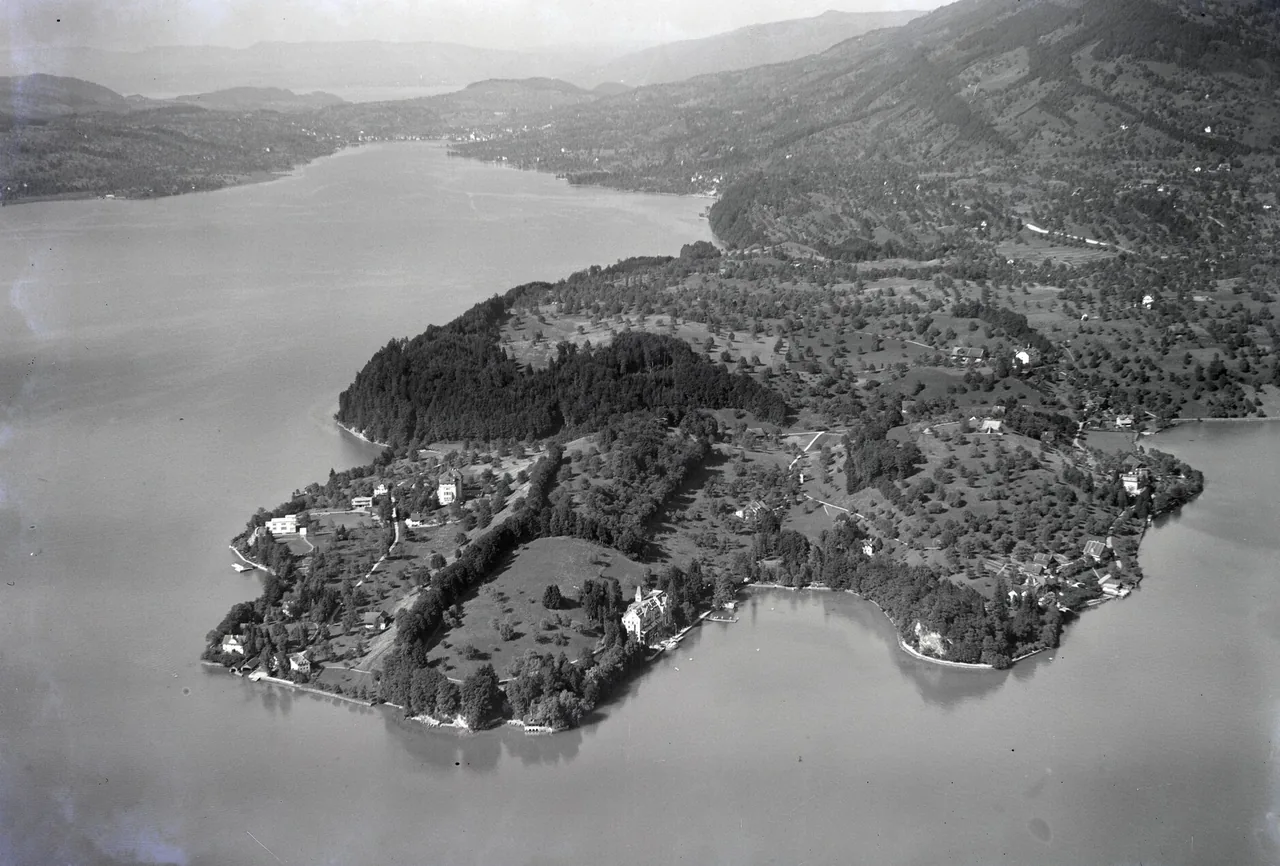
The Hertenstein peninsula on Lake LucerneAerial photograph by Walter Mittelholzer, July 1934 (ETH Library, Zurich) On a plot at Hertenstein, on the shore of Lake Lucerne, he built a house of his own and named it Senar, from the first letters of Sergei and Natalia and the R of Rachmaninoff. It was meant to recall Ivanovka, and he spent every summer there until 1939, taking his grandchildren out on the lake in his motorboat. Here the wish to compose came back: he wrote the Rhapsody on a Theme of Paganini between July 3 and August 18, 1934, and finished the Third Symphony on June 29, 1936. On August 11, 1939, he played at the Lucerne festival, his last concert in Europe; days later, with war coming, he left Senar for the last time. The villa was opened to the public on April 1, 2023, the 150th anniversary of his birth.
Practicing one of these? Track it in Piano StreakPieces from this place
Listen on Apple Music
1940
Centerport: Orchard PointUnited States
He spent the summer of 1940 resting after minor surgery at Orchard Point, an estate at Centerport on Long Island, looking out over Long Island Sound. There he wrote the Symphonic Dances, the only work he composed entirely in the United States and the last he completed. Near the end of the score he wrote the word “Hallelujah.”
Practicing one of these? Track it in Piano StreakPieces from this place
Listen on Apple Music
1942–43
Beverly Hills: the last homeUnited States
On his doctor’s advice he moved to a warmer climate, and in June 1942 he bought a house at 610 North Elm Drive in Beverly Hills. Vladimir Horowitz lived nearby and often came to play piano duets. He had decided that the 1942–43 season would be his last. On February 1, 1943, he and Natalia became American citizens; on February 17 he gave his last recital, in Knoxville, Tennessee, and was brought home by train, gravely ill with cancer. He died at home on March 28, 1943, a few days before his seventieth birthday.
1943
Valhalla: Kensico CemeteryUnited States
He had wished to lie in Moscow’s Novodevichy Cemetery, where Scriabin, Taneyev and Chekhov are buried. His American citizenship made that impossible, and he was buried at Kensico Cemetery in Valhalla, New York, north of New York City.
About this map
Until 1918 Russia used the Julian calendar, which by then ran thirteen days behind the one used today. Where the sources give a date in today’s calendar, this page gives the day; where they do not say which calendar they mean, it names only the month or the season. The two estates of his childhood no longer stand, and their places on the map are approximate. As a touring pianist Rachmaninoff played in hundreds of towns; the page keeps to the places where he lived and composed, and simplifies the routes between them. The map shows today’s borders and country names. He spelled his own name “Rachmaninoff” in the West, and the page follows him.
Sources
- Sergei Rachmaninoff, Wikipedia (English)
- List of compositions by Sergei Rachmaninoff, Wikipedia (English)
- Sergei Rachmaninoff, Wikipedia (Japanese)
- Ivanovka estate, Wikipedia (English)
- Villa Senar, Wikipedia (English)
- Piano Concerto No. 3 (Rachmaninoff), Wikipedia (Russian)
- Variations on a Theme of Corelli, Wikipedia (French)
- Oneg Estate Park, Novgorod region travel guide
Pictures
All pictures are in the public domain, from Wikimedia Commons.
- Sergei Rachmaninoff: Photograph by Kubey-Rembrandt Studios, Philadelphia, 1921
- Rachmaninoff at about twelve: Photograph, 1885
- Nikolai Zverev with his pupils, among them Scriabin (in uniform) and Rachmaninoff: Photograph, late 1880s
- The house at Ivanovka: Photograph, early 20th century
- Feodor Chaliapin (left) and Rachmaninoff: Photograph, 1890s
- Rachmaninoff around the time of the Second Concerto: Photograph, about 1901
- Rachmaninoff in 1909: Drawing by Robert Sterl, 1909
- “Isle of the Dead”: Painting by Arnold Böcklin, the version of 1886 (Leipzig)
- Rachmaninoff at Ivanovka, correcting the proofs of the Third Concerto: Photograph, 1910
- The New Theatre on Central Park West, New York: Photograph, 1909 (Library of Congress)
- Rachmaninoff at the piano: Painting by Leonid Pasternak, 1916
- Rachmaninoff (left) with Nikolai Struve: Photograph, 1918
- Rachmaninoff at the piano: Photograph by Bain News Service (Library of Congress)
- Rachmaninoff at the piano: Photograph, 1936
- The Hertenstein peninsula on Lake Lucerne: Aerial photograph by Walter Mittelholzer, July 1934 (ETH Library, Zurich)
Recordings
Each play button opens one recording of the piece on Apple Music, chosen by us; longer works open on their first movement.
The performers: Gidon Kremer, Giedrė Dirvanauskaitė and Daniil Trifonov, André Previn and the London Symphony Orchestra, Vladimir Ashkenazy, Vladimir Ashkenazy, André Previn and the London Symphony Orchestra, Vladimir Ashkenazy and the Royal Concertgebouw Orchestra, Vladimir Ashkenazy and André Previn, Nikolai Lugansky, Sheku Kanneh-Mason and Isata Kanneh-Mason, Daniil Trifonov, Boris Giltburg, Stephen Cleobury and the Choir of King’s College, Cambridge, Vladimir Horowitz, Nikolai Korniev and the St. Petersburg Chamber Choir, Kiri Te Kanawa and Roger Vignoles, Sergei Rachmaninoff (a piano roll he cut himself)
Piano Streak is not affiliated with Apple or with the performers. Apple Music is a trademark of Apple Inc.
Map data © OpenStreetMap contributors, tiles by OpenFreeMap, drawn with MapLibre.
Practicing Rachmaninoff?
Piano Streak keeps the time you spend on each piece, so you can see your practice add up day by day.